Bug DNA used to fight disease
Wednesday, 20 March, 2002
Australian scientists are claiming a world-first technique for using DNA 'fingerprints' of bacteria as an early warning system against disease epidemics.
The breakthrough, which initially targets bacteria causing potentially fatal meningococcal disease, could be in use in public health departments within a year, they say.
Researchers, who have lodged a patent for the process, describe it as "a bug version of the process used to do forensic testing on criminals" and claim it is highly marketable.
The technique was worked out in the CRC for Diagnostics at the Queensland University of Technology.
It is similar to human DNA testing but has never been applied before to disease diagnostics, according to CRC senior research fellow Dr Philip Giffard.
It targets specific sites on the bacteria's DNA and compares them to determine "if we are dealing with one bug that has spread or unrelated bacteria."
That type of information is essential to early identification of a pending epidemic but currently is available only through lengthy, expensive methods.
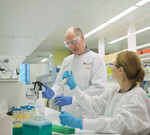
Giffard and fellow researcher Gail Robertson have developed prototype tests in their laboratory and Giffard hopes their techniques could be made available to public health departments within six to 12 months.
"What makes this approach really exciting is that it can be applied to a whole range of bugs, including E. coli, golden staph and salmonella," he said.
"This also makes the technology highly marketable, and we will be working to commercialise the research."
The Queensland Government has responded to the breakthrough by pledging $300,000 to support and extend the research over the next three years.
The CRC for Diagnostics is a national collaboration between academic and industry partners. Major industry partner is medical diagnostics company PanBio Ltd, which has commercial rights to any products flowing from the research.
PanBio is an equal partner with the government in Diatech, the arms-length proprietary company set up to commercialise CRC research.
PanBio CEO Mel Bridges said his company is "vitally interested" in the new technique. The company will release the first DNA probe for the herpes virus around mid-year based on technology created by the same CRC research team.
Although the team concentrated on meningococcal disease, "the algorithms they have developed can be used for fingerprinting any pathogen," Bridges said.
Other groups around the world are working on DNA fingerprinting of diseases but "this approach looks unique."
The CRC for Diagnostics recently appointed a new CEO, Prof Ian Gardner, formerly chief scientist at Queensland Medical Laboratories, who will take up the post this month.
Maternal diet doesn't affect baby's food allergy risk
Higher maternal consumption of egg and peanut during pregnancy and breastfeeding does not protect...
Overuse of inhalers can increase heart attack risk
Overuse of reliever inhalers is associated with higher risks of developing and dying from...
Unhealthy Western diet could accelerate cognitive decline
An unhealthy Western-style diet is associated with a faster cognitive decline in people with a...