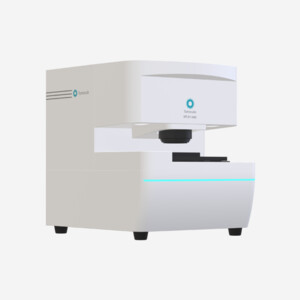
Tomocube HT-X1 mini 3D holotomography system
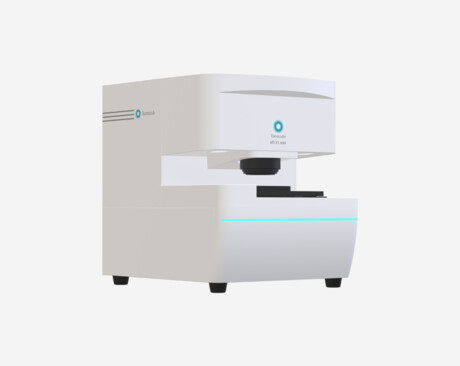
Scitech, in partnership with Tomocube, is proud to announce the launch of the HT-X1 mini, a compact and flexible holotomography platform designed to bring high-resolution, label-free 3D imaging to a wider range of laboratories. Combining cutting-edge imaging technology with a user-friendly design, the HT-X1 mini is engineered to enable researchers in cell biology, immunology, regenerative medicine and high-content 3D imaging to capture live cells in their natural state without perturbation.
Weighing just 30 kg, the HT-X1 mini is engineered to fit seamlessly into even the most space-constrained environments, from cell culture rooms to clinical and field laboratories. Its plug-and-play usability ensures research teams can rapidly integrate advanced 3D imaging into their workflows, transforming routine experiments into high-impact discoveries.
At the heart of the HT-X1 mini is Tomocube’s second-generation holotomography technology, which delivers high-resolution 3D refractive index maps of live cells. The system is fully compatible with TomoAnalysis, Tomocube’s image analysis suite, providing researchers with seamless continuity from data acquisition to quantitative analysis.
Understanding that research needs evolve, the HT-X1 mini is built with modular flexibility. Laboratories can begin with essential imaging capabilities and later expand to include fluorescence imaging, environmental incubation, laser-based autofocus and multi-wavelength illumination, ensuring the platform can grow alongside their research. This versatility supports everything from routine cell monitoring to complex, high-content 3D studies.
The HT-X1 mini combines a 40× NA 0.75 air objective lens, a 2.8 MP CMOS image sensor, LED illumination at 444 nm (with optional 520 and 660 nm wavelengths), and a motorised stage for precise sample positioning. Optional modules for multi-channel fluorescence, laser-based autofocus and environmental control further enhance its capabilities, making advanced live-cell 3D imaging more accessible.
The HT-X1 mini is designed to democratise high-resolution, label-free 3D imaging, giving researchers the tools to observe cellular processes in unprecedented detail while maintaining flexibility, ease of use, and adaptability for future research demands.
Phone: 03 9480 4999
Analytical Industries GPR-3500 Portable Purity Oxygen Analyser
The Analytical Industries GPR-3500 Portable Purity Oxygen Analyser is a battery-powered...
Bio-Rad Laboratories Foresight Pro chromatography columns prepacked with Nuvia resins
Bio-Rad Laboratories has launched its process-scale Foresight Pro chromatography columns,...
CoolLED pE-300lite fluorescence microscopy LED light source
Comprising a light source, control pod and power supply, the system provides intense,...
Learn More
I am interested in Tomocube HT-X1 mini 3D holotomography system.
Complete the form and a supplier representative will be in touch.