Building the Labs Where Discovery Starts in Asia-Pacific
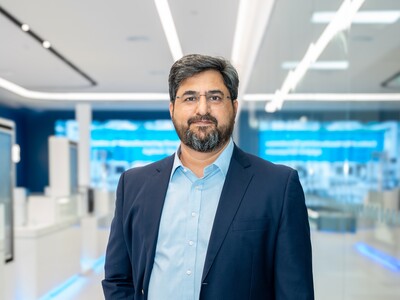
By Bharat Bhardwaj, Vice President of APAC Sales, Agilent Technologies
Thursday, 05 November, 2026
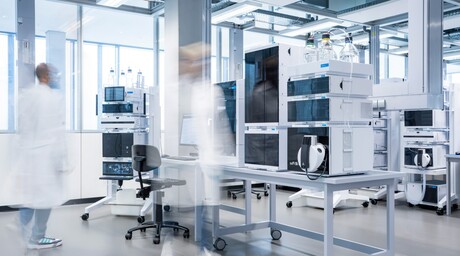
New Australian studies detect “forever chemicals” in rain, tap water and serum. Agilent is investing in research hubs across Australia and Asia-Pacific to speed discovery of compounds that routine testing misses.
Rain falling on Melbourne carries PFAS. So does tap water in Sydney, and so does the serum sample of Australians, including young children. Detection is not the same as harm, and the concentrations reported are low. What the recent studies show is that these “forever chemicals” are more widespread, and more varied, than routine monitoring was designed to find.
What the research found
RMIT and EPA Victoria researchers detected eight PFAS in Melbourne rainwater between 2024 and 2025, with more in rain from over-land air, pointing to urban and industrial sources. They estimated rain could deliver about 10.6 kilograms of PFAS to Port Phillip Bay each year.
A Sydney tap-water study detected 31 PFAS, 21 of them new to Australian reports. Researchers also identified two PFAS in pooled serum samples that had not been previously reported, including samples from children under 5.
Detection does not mean harm. PFOS was found in 98.6% of people in the national health survey, yet levels were lower than in other countries.
Some communities face a concentrated problem. In the Blue Mountains, WaterNSW identified elevated PFAS concentrations in the upper Adams Creek catchment and three potential historical contamination sources, and further investigations continue.
The hidden gap in what we measure
Australia updated its drinking water guidelines in June 2025, including a health-based guideline of 8 nanograms per litre for PFOS. From July 2025, national restrictions prohibited the import, manufacture and export of PFOA, PFOS, and PFHxS. While the guidelines cover a list of compounds, researchers keep finding others.
Protecting communities and shaping regulation depend on knowing what’s out there. That means moving beyond known contaminants to identify thousands of unregulated forever chemicals that may be in our environment.
At the same time, tighter environmental and water-safety standards also mean laboratories must measure more compounds, at lower levels, with more reliable results regulators can trust.
That need is not unique to Australia, and instrument makers are responding region by region.
Our goals for the region
Agilent’s Asia-Pacific business was set up to achieve double-digit growth. The company is also responsible for expanding its range of software, services, and expertise that provide trusted answers to researchers’ most challenging questions.
Its goal is to be the fastest-growing scientific instrument company in the region, and Agilent is making meaningful progress in building the foundations for long-term growth.
Research labs are central to that foundation. By working with academic researchers on local health, water-safety and environmental questions, Agilent aims to help more communities across the region get the answers they need. That makes investing in research an expansion decision as much as a scientific one.
Building discovery capacity in APAC
Agilent has established Centres of Excellence within flagship university campuses in South Korea, Singapore and Malaysia in the past three years. In 2025, it launched an Innovation Hub in Australia with the University of Melbourne’s Australian Laboratory for Emerging Contaminants (ALEC).
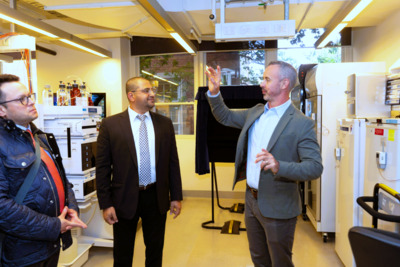
Each hub pairs analytical instruments and application expertise with local academic research, shaped by national priorities such as cardiovascular disease, cancer research, environmental health, water-safety and life sciences. At ALEC, the focus is on emerging contaminants, from PFAS to microplastics and flame retardants.
The hub brings together Agilent’s 6495C Triple-quadrupole LC/MS and LDIR systems to support research into emerging contaminants. These next-generation technologies have pioneered ultra-trace detection, achieving world-class breakthroughs in parts per quadrillion (PPQ)-level quantitation of PFAS and microplastics in drinking water.
Commercial case for shared science
Methods developed in a university lab, once validated and published, can become the basis for the routine methods that commercial, government and environmental laboratories adopt.
The science community benefits as well. Access to current instrumentation lets researchers pursue questions that budgets might not otherwise allow, and published methods become a shared resource.
Agilent’s training is part of the value: students and early-career scientists who learn on advanced platforms carry those skills into regulators, utilities, consultancies and industry, broadening the talent pool that every laboratory in the region relies on.
The open questions
Researchers and regulators still face unresolved issues globally: where safe thresholds of forever chemicals should sit, what newer compounds do to health, and what long-term, low-dose exposure means for the population. Until those questions are answered, monitoring is likely to expand rather than narrow.
As the picture of forever chemicals in Australia is still being drawn, the laboratories built today will help detect these compounds and generate the data needed to better understand their prevalence and potential impact.
Celebrating 25 years in optical imaging expertise with over 30,000 IVIS publications!
It's been 25 years since the very first IVIS preclinical optical imaging system was launched,...
Efficient and Reliable Gas Control in Material Analysis with Burkert
Burkert's expertise in fluidics facilitates the development of tailored gas control solutions...
Delving deeper into CAR T cell evaluation
Discover a 3D imaging workflow to study the infiltration potential of CAR T cells into solid tumors.