Crowd funding to fight melioidosis
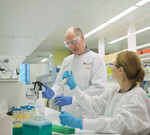
Researchers from James Cook University (JCU), who recently developed a highly sensitive and rapid multiplex diagnostic test for melioidosis, have launched a crowd funding campaign to help make their test a reality.
Melioidosis is caused by the multidrug-resistant bacterium Burkholderia pseudomallei, which is endemic in northern Australia. The disease particularly affects people in tropical regions such as Townsville and Darwin, and has a high mortality rate (from 16% in northern Australia to 40% in north-east Thailand) in part because it is difficult to diagnose.
Lead researcher Associate Professor Patrick Schaeffer, from JCU’s Supramolecular and Synthetic Biology Group, said the new test “works by detecting a subset of specific antibodies that are released in the blood of all patients infected by the bacterium”. Previous sensitive tests took 3-4 days to obtain a result, possibly hindering successful treatment, but the new diagnostic test - a 2-dimensional immunoarray (2DIA) - can obtain a result in three hours.
“The 2DIA has a sensitivity and specificity of 100% and 87.1%, respectively,” the research team said, writing in the journal Diagnostic Microbiology and Infectious Diseases.
The test was developed by researchers from JCU and The Townsville Hospital and funded by the Queensland Government’s Smart Futures Fund. Team member Dr Alanna Sorenson, who developed the initial proof-of-concept technology, said the researchers are now aiming to attract funding to convert the 2DIA into a rapid, lifesaving bedside test similar in action to a pregnancy stick test.
“This may be [from] people who have been touched by melioidosis in some way: either themselves or someone they know, people who are interested in tropical health and people who are interested in medical research,” she said.
The team has launched the initiative ‘Help Fight Melioidosis’ through online crowd funding platform Pozible. Interested parties can pledge the amount they are comfortable with through the website, and the donors will only have to pay if the project reaches its goal of $20,000.
“The researchers are aiming to raise $20,000 towards materials needed to develop and validate a rapid form of the 2DIA, potentially needing only a drop of blood from a finger prick,” Dr Sorenson said.
A variety of rewards are available depending on the size of each pledge, including thanks on social media, viewing a presentation of the test in action, a tour of the JCU facilities and more. To donate, visit http://www.pozible.com/project/174790.
NSW Govt to launch science and innovation fund
The fund will be used to coordinate strategic investments, deliver on government priorities and...
DKSH brings Bioyond Robotics' lab automation products Down Under
DKSH will provide distribution of the Bioyond Robotics portfolio of AI-driven autonomous...
Immunologist wins GSK Award for respiratory virus research
Award winner Professor Katherine Kedzierska seeks to answer an important question: why do some...