Protect your patients, products, and reputation with compliant continuous monitoring
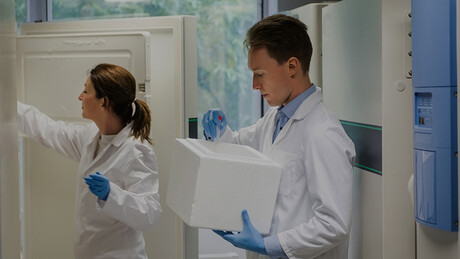
In modern hospitals and clinical laboratories, a single missed temperature excursion or unnoticed pressure drift can undo months of careful work. Vaccines lose potency, blood products are discarded, critical samples are compromised — and when auditors arrive, “we didn’t see the alarm” is not an acceptable explanation.
Healthcare teams are expected to do more with less while proving, every day, that environments are safe and compliant. That means not only monitoring refrigerators, freezers, operating rooms, quarantine rooms, and research storage, but also being able to demonstrate exactly what happened, when, and how you responded.
If your pharmacy, lab, or clinical facility is still relying on manual checks, isolated data loggers, or non‑scalable systems, you are carrying unnecessary risk, including:
- Gaps in temperature, humidity, pressure or CO2 data that appear only during investigations or inspections
- Alarm notifications that don’t reach the right person in time
- Audit trails scattered across multiple systems and hard to defend
- Difficulty standardising monitoring across multiple sites or departments
Continuous, defensible environmental monitoring is now a core part of good clinical and laboratory practice. A well‑designed system can:
- Provide real‑time visibility into critical parameters (temperature, relative humidity, differential pressure, CO2) across pharmacies, OR suites, laboratories, quarantine and isolation rooms, and research storage
- Generate secure, tamper‑evident audit trails that stand up to GxP, Joint Commission, and other regulatory reviews
- Support faster, more confident responses to alarms so you can prevent product loss and protect patients
- Scale from a single facility to large hospital networks without overloading IT and quality teams
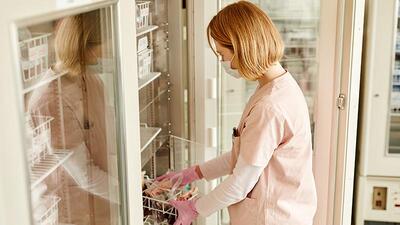
In the webinar ‘Monitor. Prove. Protect: Compliance & Care in Healthcare Environments’, Vaisala’s Senior GxP Regulatory Expert, Paul Daniel, examines what a fit‑for‑purpose continuous monitoring system looks like in real healthcare and lab settings. You will see how hospitals, pharmacies, and clinical laboratories are using continuous monitoring to:
- Reduce product waste and rework
- Simplify inspections and audits with robust, searchable data
- Strengthen patient and staff safety with reliable alarms and escalation
- Roll out a consistent monitoring strategy across complex facilities
You will also gain practical guidance on:
- Which environmental parameters matter most in clinical and lab spaces, and why
- How audit trails, alarm handling, and secure data storage affect regulatory compliance
- How to choose and deploy a monitoring solution that aligns with GMP/GCP expectations while remaining realistic for frontline teams
If you are responsible for pharmacy operations, clinical or research labs, operating theatres, isolation rooms, or trial environments — and you want to reduce compliance risk while protecting both products and patients — this session is designed for you.
When conditions get tough, can your validation equipment keep up?
Sterilisation, freeze-drying, disinfection and pasteurisation all have something important in...
Accelerating ag-tech R&D through innovative liquid handling
Transforming from quality control testing to R&D made it increasingly difficult for BW...
Introducing Rainin Vero: The Next Generation in Electronic Pipetting for Life Sciences
With the recent launch of the Rainin Vero, Mettler-Toledo Rainin ANZ is setting a new standard...