Automated Cell Counting Without Stains: A New Approach to Cell Viability Analysis
Accurate cell counting and viability assessment are fundamental to modern life science research. From routine cell culture and bioprocess development through to emerging cell and gene therapies, researchers rely on these measurements to make critical decisions about experimental design, process optimisation and product quality.
For decades, haemocytometers and dye-based assays such as Trypan Blue have formed the backbone of cell counting workflows. While effective, these methods can be labour intensive, operator dependent and limited in the information they provide about cell health.
Advances in automated cell counting technology are changing this landscape. New stain-free approaches using Digital Holographic Microscopy (DHM) and machine learning enable researchers to determine cell concentration and viability without dyes, labels or extensive sample preparation. The result is a faster, more streamlined workflow that can provide deeper insights into cellular health while preserving sample integrity.
Why accurate cell counting matters
Cell counting is a critical step in cell culture workflows, influencing experimental reproducibility, culture performance and downstream analytical results. Researchers use cell counts to determine seeding densities, monitor growth and optimise bioprocess conditions. Even small inaccuracies can affect experimental outcomes and confidence in results.
As biological research becomes increasingly complex, laboratories are under pressure to generate reproducible data. Automated cell counting technologies help address this challenge by reducing subjectivity and standardising measurements across users and laboratories.
The challenge with traditional cell counting methods and the rise of automated cell counters
Manual haemocytometer counting remains widely used but relies heavily on operator judgement and can be time-consuming when analysing multiple samples.
Many laboratories also use viability stains such as Trypan Blue, which add preparation steps and increase workflow complexity. While effective, these methods provide a relatively simple live-or-dead assessment and may not reveal subtle changes in cell health. As a result, researchers are increasingly seeking automated solutions that improve consistency while simplifying workflows.
Automated cell counters have gained popularity because they reduce operator variability, improve reproducibility and increase throughput.
However, many automated systems still rely on staining reagents to assess viability, requiring ongoing consumables and additional preparation steps. This has fuelled interest in a new generation of stain-free automated cell counters capable of measuring both cell concentration and viability without dyes or labels.
Moving beyond Trypan Blue with stain-free cell counting
Recent advances in imaging and computational analysis have enabled entirely new approaches to cell counting. One example is the METTLER TOLEDO CytoDirect Automated Cell Counter, which combines Digital Holographic Microscopy (DHM) and machine learning to deliver stain-free cell counting and cell viability analysis without dyes, labels or fluorescent markers.
Unlike conventional automated cell counters that depend on staining reagents, CytoDirect analyses the optical and morphological properties of cells directly. Digital Holographic Microscopy captures quantitative information from living cells, while machine-learning algorithms automatically identify cells, determine concentration and assess viability.
Because cells remain unstained and unaltered, researchers can preserve samples for downstream applications while obtaining rapid, label-free results. This non-destructive approach is particularly valuable for sensitive cell culture workflows, biotechnology applications and cell therapy research.
Understanding cell health beyond live and dead
Traditional viability assays often classify cells as either viable or non-viable. In reality, cell health exists on a continuum. Cells may experience stress, undergo early apoptotic changes or exhibit subtle morphological alterations before they are detected by conventional staining methods.
This is where Digital Holographic Microscopy (DHM) offers an advantage. By analysing physical and morphological characteristics, DHM-based systems provide deeper insight into cell health and viability, helping researchers make more informed decisions around culture conditions and process optimisation.
As cell therapies, regenerative medicine and advanced biomanufacturing continue to grow, this more detailed understanding of cell health is becoming increasingly important.
Why METTLER TOLEDO developed a stain-free automated cell counter
As cell-based research evolves, scientists need more than faster cell counts. They require analytical tools that provide meaningful insights into cell health while reducing workflow complexity and variability.
To address these challenges, METTLER TOLEDO developed the CytoDirect Automated Cell Counter, combining Digital Holographic Microscopy with machine-learning-based image analysis. The platform delivers rapid, stain-free cell counting and viability assessment while reducing reagent use, sample preparation and workflow variability.
Because CytoDirect does not require dyes such as Trypan Blue, researchers can analyse living cells in their native state and retain samples for downstream applications. This makes the system particularly valuable for biotechnology, cell therapy and academic research laboratories where reproducibility and sample integrity are critical.
The result is a streamlined, label-free workflow that helps scientists generate reliable data while reducing routine laboratory effort.
Improving laboratory efficiency and workflow productivity
Laboratory productivity is often influenced by the cumulative impact of small, repetitive tasks. Cell counting is a prime example. Reducing analysis steps can have a meaningful impact on workflow efficiency, particularly for laboratories processing multiple cell culture samples each day.
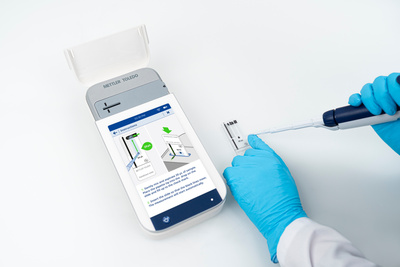
Stain-free automated cell counters eliminate the need for reagent preparation, staining and incubation. Researchers can obtain cell count and viability data in seconds, significantly reducing analysis time compared with traditional approaches. The benefits can include:
- Reduced hands-on time;
- Elimination of staining reagents and associated consumable costs;
- Improved workflow standardisation;
- Greater reproducibility between users;
- Faster decision-making during cell culture processes; and
- Preservation of cells for downstream applications.
For busy research facilities, these advantages can translate into higher productivity without sacrificing data quality.
Real-world benefits in research laboratories
The practical value of automated stain-free cell counting is already being demonstrated across academic and research environments.
At the University of Bern, researchers incorporated the METTLER TOLEDO CytoDirect Automated Cell Counter into routine workflows to streamline cell counting and viability assessment. The ability to generate rapid results without staining simplified laboratory procedures, reduced analysis time and supported more efficient cell culture workflows.
Similarly, an award-winning PhD researcher reported workflow improvements after adopting the CytoDirect system. By eliminating staining steps and reducing manual intervention, cell analysis became faster and more efficient, allowing more time to focus on research activities and experimental outcomes.
These examples highlight why researchers are increasingly exploring stain-free automated cell counting solutions such as CytoDirect. Beyond improving efficiency, the technology helps laboratories generate more standardised and reproducible data while preserving valuable samples.
Supporting the future of cell-based research
The life sciences sector is undergoing rapid transformation. Growth in cell and gene therapies, biologics development, regenerative medicine and advanced manufacturing is creating new demands for analytical technologies. Researchers require tools capable of delivering more detailed information about cell health while providing the consistency and reproducibility needed for increasingly sophisticated workflows.
Automated, stain-free cell counting aligns closely with these requirements. By combining machine learning, Digital Holographic Microscopy and non-destructive analysis, the METTLER TOLEDO CytoDirect Automated Cell Counter offers a practical solution to many of the limitations associated with traditional counting methods.
Rather than replacing scientific expertise, these technologies empower researchers with faster access to reliable data, enabling more informed decisions and supporting innovation across a wide range of applications.
Looking ahead
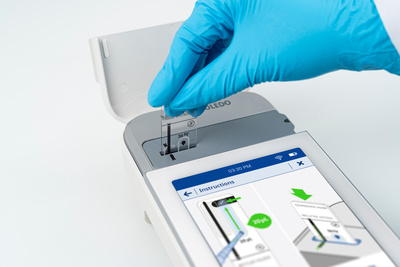
METTLER TOLEDO’s CytoDirect Automated Cell Counter represents a new generation of cell analysis technology that combines automation, stain-free viability assessment and Digital Holographic Microscopy in a single platform. By eliminating staining procedures and applying machine-learning-based analysis, the system enables researchers to generate reliable cell count and viability data in seconds while maintaining sample integrity.
As life science research continues to advance, technologies such as CytoDirect are poised to play an increasingly important role in helping researchers better understand cell health, optimise workflows and accelerate scientific discovery.
To learn more about how automated Digital Holographic Microscopy can benefit your lab, visit mt.com/cytodirect or get in touch direct via info.mtaus@mt.com or 1300 659 761.
INTEGRA Biosciences' tools support vital PCR purification protocols
INTEGRA Biosciences offers a variety of solutions to streamline crucial PCR purification...
Extracellular Vesicles: The Wonder-somes - What's the hold up?
The EXODUS system is an advanced exosome isolation technology, offering significant improvements...
CytoDirect: the new era of cell counting
What if there was a more convenient, safe and fast way to conduct cell counting, all while...