A scientist, a cooler and a long-haul flight in the fight against MND

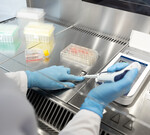
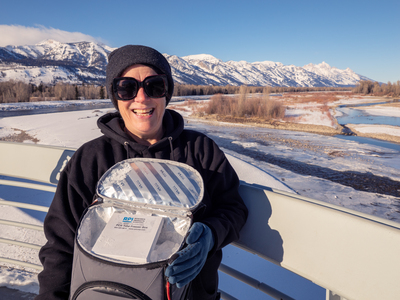
Early in January 2026, neuroscientist Dr Rachael Dunlop boarded a flight from Sydney to the US with a precious and unusual item of carry-on luggage: a cooler containing blood samples from Australian patients with neurodegenerative diseases including motor neurone disease.
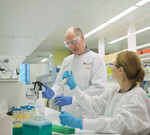
After navigating several transit points and border protection checks, the samples — and their personal escort — finally reached Dr Dunlop’s laboratory at the Brain Chemistry Labs in the stunningly picturesque town of Jackson, Wyoming. Now they are poised to make a valuable contribution to the development of a groundbreaking diagnostic blood test for motor neurone disease (MND).
At present, diagnosis of MND relies on careful clinical assessment of signs and symptoms by an experienced neurologist, together with the results of tests that exclude other neurodegenerative diseases with similar and overlapping presentations.
But there’s an urgent and overwhelming need for a fast, accurate and cost-effective test based on a specific “biomarker” that can be easily collected in a minimally invasive way, said Professor Dominic Rowe AM, who heads the MND clinical service at Macquarie University Hospital.
Long road to diagnosis
Patients with MND have typically seen several other medical specialists before they see a neurologist with MND experience; clinical studies have found an average time of eight months between the onset of symptoms and a definitive MND diagnosis. Rates of initial misdiagnosis are also high — up to two-thirds of patients in some studies — meaning many patients undergo unnecessary medical tests and procedures along the path to having an MND diagnosis confirmed.
And while there’s currently no cure for MND, earlier diagnosis and treatment offer potential to slow the progress of the disease, ease symptoms and improve patient quality of life.
“A biomarker that’s truly a surrogate for disease activity would mean earlier diagnosis and earlier initiation of therapies that slow or halt the disease,” Rowe said. “It would allow us to measure disease progression far more accurately; it could even help to screen for MND.”
Tell-tale ‘fingerprint’
For several years, Dunlop and colleagues in the US have been working on a test based on short, single strands of ribonucleic acid (RNA) — so-called microRNAs (miRNAs) — found in body fluids like blood. RNA is the molecule in cells that helps turn genetic instructions encoded in DNA into proteins; miRNAs don’t code for proteins themselves but control how other genes are expressed.
“We’ve identified a combination of eight miRNAs that we’ve shown are diagnostic for both sporadic and genetic MND cases,” Dunlop told fellow MND researchers at Macquarie University in a presentation during her recent visit to Australia.
Dunlop’s team first demonstrated the accuracy and specificity of this approach to testing using miRNAs found in neural-enriched extracellular vesicles (NEE) — tiny, bubble-like packets released by brain and nerve cells that circulate in the blood carrying molecular “cargo”. Their latest published research has extended and validated their approach using miRNA collected from peripheral blood without the complex and time-consuming process needed to extract miRNA from NEE.
“If we can show this miRNA ‘fingerprint’ is present in the circulation before changes in proteins we know are there by the time MND symptoms first appear, this test might have predictive power,” says Dunlop. “That’s something we’re planning to evaluate by testing for miRNA in people who carry genes associated with MND — before they’ve developed any symptoms.”
The specificity of the eight-miRNA combination has so far been replicated in five independent patient cohorts with a combined sample size of 788. Importantly, the test has been shown to identify MND in samples from newly diagnosed patients as well as in samples from patients at various stages of the disease, diagnosed by different neurologists, and stored in a biobank for many years.
And that’s where the samples from Australian MND patients come in.

Macquarie samples will broaden clinical base
Originally from Australia, Dunlop is a visiting research associate and long-time collaborator at Macquarie, and the specimens entrusted to her care were collected as part of the MND Research Centre’s Neurodegenerative Disease Biobank, established in 2013. All patients of the MND service and clinic at Macquarie, together with their families, are invited to contribute to the Biobank.
“MND is quite heterogeneous, so we’d like to ensure our diagnostic biomarker is useful across the full range of clinical settings, independent of variables like age of onset, stage of progression and disease severity,” Dunlop said. “The Macquarie Biobank gives us access to blood samples from a different patient population attending MND clinics where extensive clinical data have also been carefully collected.”
Rowe said it’s exciting that the extensive patient experience from Macquarie is being used to further develop the test.
“The technology developed by Dunlop and her colleagues is unique and we hope her extraordinarily impressive initial results can be replicated using our Macquarie Biobank samples,” he said.
“It is really gratifying to see our Macquarie patient samples helping advance the global war on MND.”
Air pollutant exposure linked to glaucoma, cataracts and suicide
People who are exposed to high levels of air pollution are more likely to develop glaucoma and...
Could this 'nanobone' material allow children to regrow bone?
Australian scientists believe they have found an alternative to invasive bone graft procedures in...
The last mile of life sciences innovation
How do we translate technological possibility into meaningful real-world impact?