New species of bacteria discovered in prostate cancer patients
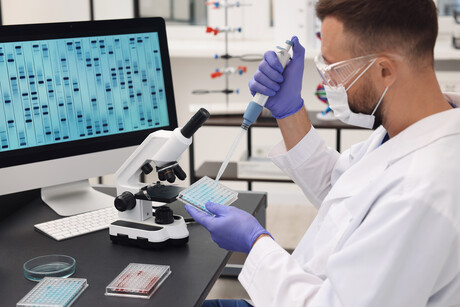
An international research team has discovered the genetic blueprints of 18 new bacterial species — all of which were collected from prostate cancer patients — in a breakthrough which could improve our understanding of how the cancer develops.
The study is one of several major publications from the Pan Prostate Cancer Group (PPCG), a global collaboration co-founded and co-led by scientists at the University of East Anglia (UEA) and The Institute of Cancer Research, London. The consortium has brought together researchers from nine countries and molecular data from more than 2000 prostate cancers to create one of the world’s most comprehensive resources for studying the disease.
Reading what was thrown away
When a tumour or a blood sample is sequenced, a small proportion of the reads do not match human DNA at all, so they are normally filtered out as ‘noise’ and discarded. In this study — which was published in npj Biofilms and Microbiomes — the research team used a technique called metagenomic assembly to rebuild whole bacterial genomes from these fragments, screening 2176 sequencing datasets from the PPCG. The team ultimately recovered 249 near-complete bacterial genomes from 194 prostate cancer patients; 24 of these did not match any species on record.
“Every one of these organisms was hiding in plain sight,” said first author Dr Abraham Gihawi, of UEA’s Norwich Medical School. “The data had already been generated, paid for and analysed for a completely different purpose, and the bacterial sequences were sitting in the part everyone throws away.
“The question was whether anything useful would survive that process, and the answer turned out to be yes. One of the newly identified species proved to be almost an exact genetic match to a previously documented bacteria, suggesting that the discovery is real and not an error in the data.”
Intriguingly, most of the new bacteria came from the mouth. Porphyromonas, the genus that includes the principal bacterium behind gum disease, was the most frequently recovered, and has previously been linked by the team to more aggressive prostate cancer.
Why this matters
The role of oral bacteria in disease elsewhere in the body is well established. For example, Viridans streptococci cause around one in five cases of the heart condition infective endocarditis and Fusobacterium nucleatum can spread with bowel tumours to the liver, where antibiotics have been shown to reduce both the bacterium and tumour growth in laboratory models.
Furthermore, evidence is emerging that men with gum disease have a slightly higher risk of developing prostate cancer, and Porphyromonas gingivalis — the main bacterium behind gum disease — has been found in both dental plaque and prostate fluid from the same patients. In 2024, researchers reported that P. gingivalis may worsen benign prostate enlargement through an inflammatory mechanism they described as an ‘oral–prostate axis’; however, progress has been hampered because many of these microbes have never been grown in the laboratory, lack reference genomes and cannot be detected with species-specific tests. This new breakthrough addresses that gap.
“The bacteria we recovered are overwhelmingly oral organisms,” noted senior author Professor Daniel Brewer, from Norwich Medical School. “Part of that is simply that there are far more bacteria in the mouth than in prostate tissue, so they assemble more readily. But the mouth keeps turning up in prostate cancer research, and these are the organisms at the centre of it.
“We reported in 2022 that men carrying a set of anaerobic bacteria, several of them from the oral cavity, were more than twice as likely to see their cancer progress. In bowel cancer, that kind of observation has already been followed through to the point where an oral bacterium is treated as a target. Prostate cancer is some way behind, and the reason is practical rather than scientific: the organisms involved had never been properly characterised.”
Now that they have the genomes of such bacteria, the research team can develop tests for them in clinical samples, work out how to grow them, and begin to study their genes and how they might be linked with cancer. As explained by Brewer, “Until now we could say a type of bacteria was involved, which lumps very different species together. We can now work species by species — asking whether one of them is driving aggressive disease, and whether doing anything about it changes the outcome.”
Part of a wider effort
This is just one in a series of studies by the PPCG that are redrawing the genetic map of prostate cancer and what it means for how patients are managed. As explained by co-founder Professor Ros Eeles, the long-term goal of the group is to help ensure that patients receive the right treatment at the right time, based on the biology of their individual cancer rather than a one-size-fits-all approach. There are a range of ways that prostate cancer develops and behaves, Eeles said, so we need to understand the biology behind those differences in order to detect and treat the cancer correctly.
“This group was built to answer why two men with the same diagnosis can have such different outcomes,” said Professor Colin Cooper, from Norwich Medical School. “Most of our answers so far have come from the tumour’s own genetics, which tell us a great deal but which we cannot change.
“Bacteria are different. If an organism contributes to aggressive prostate cancer, that is something that could potentially be treated or prevented. Very little else in this disease offers that.
“We are not claiming these bacteria cause prostate cancer. We have found them, named them and built the tools to study them, which is the step that has to come before anyone can answer the causal question properly. What strikes me is that it cost nothing to do. The data existed, the organisms were in it, and nobody had looked.”
Indeed, the discovery shows how detailed bacterial genomes can be assembled from the sequencing data left over when researchers study human DNA, at no additional cost and without collecting a single extra sample. As noted by Gihawi, “There is an enormous volume of cancer sequencing data in archives around the world, and we can use these to look for evidence of new bacteria.”
Dr Hayley Luxton, Head of Research Impact at research co-founder Prostate Cancer UK, said researchers should now be able to investigate whether these newly discovered bacteria contribute to aggressive prostate cancer, which could “deepen our understanding of the disease and lead to more targeted and effective treatments for men”.
“The next steps will be to isolate these bacterial strains from patient samples so their relationship to aggressive prostate cancer can be studied more closely,” she said. “Prostate Cancer UK is dedicated to funding innovative research, and we’re proud to have funded vital research like this to get men the treatments they need.”
Award-winning system automates vial filling for cell therapy
Celleo's Larkem V40 — created to address one of the bottlenecks holding back cell...
Air pollutant exposure linked to glaucoma, cataracts and suicide
People who are exposed to high levels of air pollution are more likely to develop glaucoma and...
Could this 'nanobone' material allow children to regrow bone?
Australian scientists believe they have found an alternative to invasive bone graft procedures in...