How Cell-Free Synthesis is Revolutionising Biotechnology
The DNA Manufacturing Bottleneck No One Talks About
Since Watson and Crick’s 1953 discovery unlocked the structure of DNA, a critical problem has plagued biotechnology for decades: producing DNA is painfully slow, expensive, and limited. Traditional plasmid DNA manufacturing can take months to over a year and can struggle to produce the complex materials required for the next generation of life saving medicines. For researchers developing gene therapies, mRNA vaccines, or diagnostic tools, this timeline isn’t just inconvenient, it’s a fundamental barrier to innovation as we step into the era of digitally encoded medicines.
Building the Foundation
The story of DNA didn’t begin in 1953. It began in 1869, when Swiss chemist Friedrich Miescher isolated a mysterious phosphorus-rich substance from white blood cells, which he termed nuclein and correctly predicted as a new class of biological molecules. Later, Phoebus Levene described the phosphate–sugar–base structure of nucleotides, and Erwin Chargaff demonstrated that adenine pairs with thymine and guanine with cytosine. These discoveries enabled Watson and Crick’s double helix model, after Jerry Donohue corrected the atomic arrangements of thymine and guanine, allowing proper hydrogen bonding consistent with Chargaff’s rules. As Professor Matthew Cobb notes, progress in science rarely moves in straight lines; it comes from accumulated insights, corrections, and occasional luck.
Limitations of Traditional DNA Production
DNA is traditionally made using organic chemistry for synthesis and microbial fermentation for amplification. While widely used, these methods have inherent limitations. Bacterial systems introduce endotoxins, requiring extensive purification before DNA can be used in therapeutics. Production is generally limited to circular plasmid formats, and certain sequences — such as homopolymers or GC-rich regions — remain difficult or impossible to synthesise reliably while such characteristics are essential features of many therapies such as mRNA. Scaling production to meet growing demand is also challenging. As demand increases for a reliable supply of high-quality synthetic DNA, mainly driven by RNA vaccines, gene and cell therapies and emerging applications, the need for more efficient and flexible production solutions has never been greater.
NunaBio: Pioneering Cell-Free Enzymatic DNA Synthesis
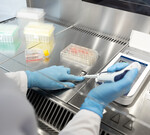
NunaBio offers a fully synthetic, cell-free approach to DNA production. Using multi-patented technology it eliminates bacterial fermentation in a single system, these platforms enable rapid, scalable DNA production using enzyme-driven reactions from no more than nucleotides and simple enzymes. Gram-scale quantities of DNA can be produced in under 7 days, compared with months or years for conventional plasmid methods. A benchtop system can generate milligram‑scale quantities of highly complex linear DNA in about 80 minutes, dramatically accelerating access to custom sequences.
Because the process is cell-free, manufacturing avoids endotoxin, antibiotics and host derived contaminants, reducing purification requirements and producing DNA suitable for sensitive applications such as gene therapy or vaccine template generation. The platform also supports multiple formats, including short oligonucleotides, gene fragments, full-length genes, repetitive sequences, and homopolymers that are challenging for traditional synthesis. The system can run continuously to deliver the world’s first fully automated DNA production of one or several sequences simultaneously. Each system is interconnected across a manufacturing network meaning updates, mutations and new technologies can propagate globally in minutes through a single platform with one tenth of the footprint of current methods.
Enabling Next-Generation Biotechnology
Researchers in Australia and New Zealand may gain early access to cell-free DNA synthesis through local facilities expected in 2026. Local access reduces international shipping delays, accelerates project iteration, and maintains control over sensitive or proprietary sequences. As biotechnology evolves, innovations in DNA manufacturing may prove as essential as the discovery of DNA itself, enabling faster, safer, and more flexible research and development.
To learn more about NunaBio and this award winning technology, contact Pete Davis, ATA Scientific (www.atascientific.com.au, 02 9541 3500, enquiries@atascientific.com.au).
References:
Read the full article on ATA Scientific’s Latest News: https://bit.ly/479ilmN
Whisper-quiet precision for modern analytical devices
Bürkert's Whisper Valves are compact electromagnetic micro-valves designed for highly...
Smarter Laboratories Through Automation: How Testo Pharma Instruments Drive Efficiency, Compliance, and Data Integrity
As laboratory automation expands, the need for reliable, traceable, and compliant monitoring...
Battelle Neural Bypass Technology Restores Movement to a Paralysed Man's Arm and Hand
Battelle has developed a technology that bypasses damaged neural pathways, enabling a...