Flinders works on method to filter nanoplastics from water
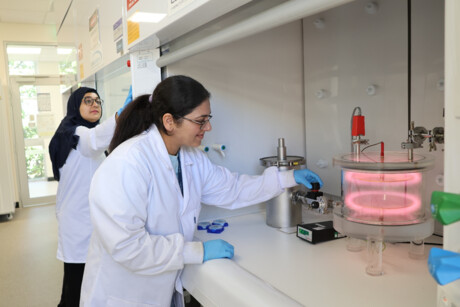
Nanoplastics are particles produced by the breakdown of larger plastic waste. These particles range in size from approximately 1 micron down to several nanometres in diameter, which makes identification, location and filtering a complex problem in water, soil and the air.
Amid concern around the purity and safety of drinking water, Flinders University researchers have published a proof-of-concept study (doi.org/10.1016/j.aca.2025.345008) in Analytica Chimica Acta that details a method capable of detecting nanoplastics using plasma polymer-coated filters.
“While effective filter materials and methods have been developed for microplastic isolation (larger particles up to 5 mm in size), accessible and cheap-to-implement solutions often fall short in successfully capturing the smaller size fractions,” said Manpreet (‘Preet’) Kaur, a PhD candidate at the Nano and Microplastics Research Consortium at Flinders University and first author of the study.
“This may require advanced instruments, high pressure or complex systems which may be inconsistent,” Kaur said. “However, our work with plasma polymer coated filters shows we can capture and quantify nanoplastics in various water samples, enabling precise insights into levels of contaminants.
“While detection methods exist, the results can be misleading if you don’t know what you’ve actually isolated,” Kaur added. “We are working on developing ways to measure nanoplastics levels accurately, so then exposure or risk can be studied, for possible harmful effects on health and the environment.”
Specifically engineered plasma polymer coatings are used as a selective surface to capture nanoplastic particles, based on their affinity towards the developed coatings — the researchers claim that they can considerably decrease the uncertainty that has impacted previous measurements by separating nanoplastics prior to analysis.
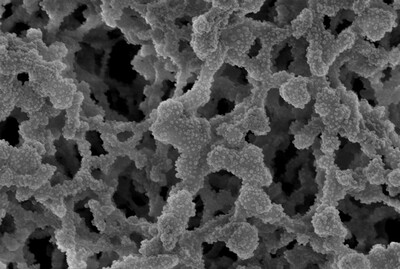
“After particle isolation, we use thermogravimetric analysis to reveal the degradation behaviour of materials when heated,” said Dr Iliana Delcheva, a Flinders post-doctoral researcher and third author of the study. “This technique can be used to confirm if the material that has been isolated is plastic, as plastics exhibit distinct thermal responses.”
Rapid blood test can detect iron deficiency in minutes
Scientists have developed a blood test that can detect iron deficiency in just 15 minutes,...
Common carp relatives could help stop virus spreading
While common carp are highly vulnerable to koi herpesvirus, their close relatives including...
Prostate cancer therapy aims for first-in-human clinical studies in 2027
UniQuest, the commercialisation company of UQ, has entered into an exclusive licence agreement...