Can yawning advance the study of neurodegenerative diseases?
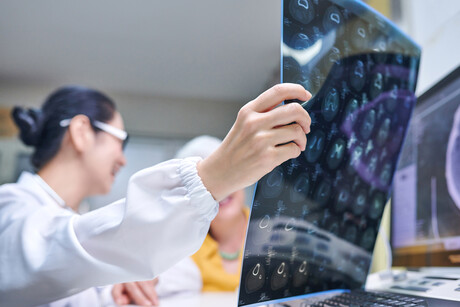
Australian neuroscientists using MRI scans to monitor the flow of cerebrospinal fluid during yawning believe their findings may assist neurodegenerative disease studies.
Scientists from UNSW Sydney and Neuroscience Research Australia (NeuRA) believe yawning may play a subtle but intriguing role in moving fluids in and out of the brain. Admitting that the idea is speculative, they said their work, which used real-time MRI scans, allowed them to see what happens inside the head and neck when people yawn, and to compare it to the effect of normal and deep breathing. They believe the study opens up an interesting avenue for understanding the physiological functions of yawning.
With its results based on a small-scale group of 22 participants, the study was led by Professor Lynne Bilston from UNSW’s School of Biomedical Engineering and published in Respiratory Physiology & Neurobiology (doi.org/10.1016/j.resp.2026.104575). What it found was that yawning triggered a specific manoeuvre in which cerebrospinal fluid (CSF) and venous blood moved out of the skull together, whereas during deep breathing cerebrospinal fluid flowed into the skull — a finding that surprised the researchers.
A clear liquid that surrounds the brain and spinal cord, filling the space around them like water around a floating object, CSF is important because it helps carry nutrients in and waste products out and also cushions and protects the brain and spinal cord from injury. “We observed that yawning is a body movement that can influence the flow of fluids around the brain,” Bilston said.
“There has been speculation that yawning can help clear waste from the brain, but so far there has not been solid proof,” Bilston added. “Our research suggests that yawning can play a role in cleaning brain fluid, which would most likely happen close to bedtime.” The finding could prove important for studies into neurodegenerative diseases such as Alzheimer’s, Parkinson’s and dementia, the researchers believe — all of which have been potentially linked to the build-up of waste products in and around the brain that can be a result of impaired CSF flows.
In order to trigger so-called ‘contagious yawns’, volunteers were shown videos of people, and even animals, yawning. MRI scans were then taken at the level of their C3 vertebra, a crossroads in the upper neck where blood and CSF pass as they travel to and from the brain. Comparison was then made between the scans of the subjects contagiously yawning with those simply taking a deep breath — as if pretending to yawn. Only where — via those contagious yawns — volunteers were really yawning did venous blood and CSF flow out of the skull together.
The team also said that the evidence suggests yawning is a way for the body to regulate the temperature in and around the brain. “In humans, the brain tissue can be up to one degree Celsius warmer than the rest of the body, and venous blood leaving the brain is typically about 0.2–0.3 degrees warmer than the arterial blood entering it,” said corresponding author of the paper Adam Martinac.
“So when someone yawns we can now see an increase in the cooler arterial blood flow into the skull, compensating for the coupled outflow of CSF and venous blood, and therefore we can surmise there may be a thermoregulatory process happening there,” Martinac said. “We could speculate that perhaps yawning is a way that the brain helps to cool itself down, but again we would need to do more research to state that with certainty.
“We do know that a hot brain is not a good thing because there is a risk of cell damage, seizures and cerebral swelling. And there is actually a very narrow band temperature-wise where the brain is steady and balanced — what is known as homeostasis,” Martinac added. “That’s likely the reason why there are so many mechanisms — such as blood flow, and sweating — that help regulate temperatures in the brain.”
Prototype promises to build light analysis directly into imaging hardware
Thanks to a new chip, researchers believe they may be able to help cameras capture details that...
Ultrasound improves protein recovery from cauliflower waste
Abundant but often discarded during processing, cauliflower leaves contain protein and dietary...
Could this optical centrifuge demystify exotic, frictionless superfluids?
A new optical centrifuge has enabled the first demonstration of controlled spinning inside a...