Brain Institute and Clinic unites research with patient care
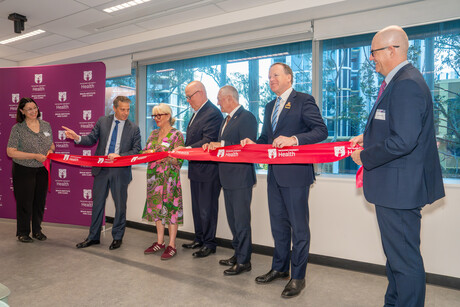
The fight against some of the world’s most devastating brain diseases has entered a new phase — one which brings research and patient care together under one roof — thanks to the launch of the Macquarie University Brain Institute and Clinic on 21 September.
Neurodegenerative diseases affect hundreds of thousands of Australians and their families, and are a leading cause of death worldwide. But while research has transformed our understanding of these diseases, effective treatments remain limited and there is an urgent need to translate scientific breakthroughs into improved outcomes for patients.
That’s where the Macquarie University Brain Institute and Clinic comes in.
Unlike traditional research centres that operate separately from clinical services, the institute has been designed to bring research and care together, employing more than 200 researchers and clinicians working across motor neuron disease (MND), Parkinson’s disease and dementia. This distinctive healthcare model means discoveries can inform patient care more quickly, clinical experience can generate new research questions, and patients can play a direct role in advancing understanding of neurological disease.
“Medical research often starts in the laboratory, but translating a discovery into a treatment that can benefit patients can take 17 years,” said Professor Patrick McNeil, Deputy Vice-Chancellor of Medicine and Health at the university.
“At the Macquarie University Brain Institute and Clinic, researchers and clinicians will work side by side, creating a much more direct connection between discovery and patient care.
“Clinical experience can help shape the questions researchers investigate, while new discoveries can be translated into clinical practice more quickly.”
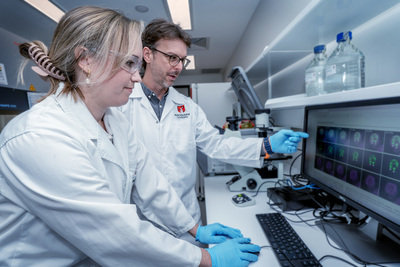
Vice-Chancellor Professor S Bruce Dowton said the institute represents the next stage in Macquarie University’s sustained investment in research, clinical care and education in neurological disease, with the university having spent years building significant expertise across neurological research, clinical care and education. This expertise has manifested in the following ways:
- Running a Neurodegenerative Diseases Biobank that has collected patient biospecimens and clinical data longitudinally for more than a decade.
- Leading a global collaboration to establish a large-scale brain bank linking biological characteristics of thousands of Parkinson’s cases with their clinical trajectories.
- Running the Macquarie University Motor Neuron Disease Research Centre, a comprehensive clinical and research program for MND.
- Running one of Australia’s largest MND clinics and a dedicated Young Onset Dementia clinic.
- Acting as the only Australian site for the international ATLAS study investigating whether MND can be prevented or delayed in people with SOD1-associated disease.
“Our ambition is simple: to make collaboration the default and, through collaboration, accelerate the discoveries, treatments and care that can improve the lives of people living with brain disease,” Dowton said. He added that the integration aspect of the institute is “more than just having a parallel alignment of clinical care on the one hand and research and discovery on the other hand — it is about really intertwining and making them inextricably interlinked”.
“By bringing these capabilities together under one roof, we can create a genuinely integrated model in which research, clinical care and education continually inform one another,” he said.
Also attending the launch event was Jane Simpson, an ambassador for MND Australia and inaugural chair of the MND Research Collective Lived Experience Research Advisory Panel. She said change is desperately needed in order to bring us closer to understanding the cause of MND and other brain diseases, and that the institute represents this change.
“Having people with MND, dementia and Parkinson’s, their families, researchers, allied health, [and] neurologists all in one space will bring change,” Simpson said. “People seeing each other every day, talking, even incidental chats making a cup of tea — that’s going to make change. For health and research to talk and to collaborate better, and to see what these diseases are really like on a daily basis, and hear what people actually need and want, will make change.”
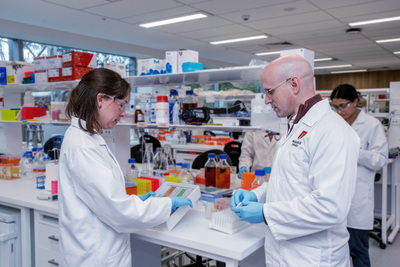
Indeed, this collaboration plays out in the institute’s open-plan laboratory every day — a space where scientists can conduct experiments including drug screening, making brain organoids, reprogramming cells and more. Crucially, the space is shared between research groups specialising in different diseases, so while people have their own lab benches, all the larger equipment is communal.
“The concept is that, by having it in this way, people can talk to each other,” said Parkinson’s disease researcher Nicolas Dzamko. “Most of these diseases are researched by groups who stay in their own lane, but obviously some things must cross across some of these diseases. They must share similar risk factors and mechanisms.”
Upstairs from this space is another set of labs, containing even more specialised equipment as well as the biobank. This means blood samples can be collected in the ground-floor clinic and be taken straight upstairs for banking, with the whole process taking mere minutes.
As for the clinical space itself, it has been designed to be as relaxed an environment as possible, with a comfortable waiting room, corridors that are wide enough to accommodate wheelchairs, breakout areas and a garden. As noted by neurologist Dr Simon Lewis, the clinic regularly plays host to clinical trial participants, who are often required to spend the day when they come in for a trial — “so they need somewhere to actually break out, sit down, chill out”.
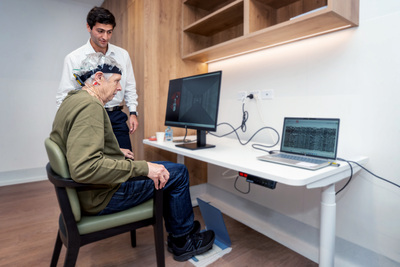
When it comes down to it, McNeal said the institute’s core purpose is to improve the lives of people living with some of the most complex and devastating conditions in medicine, by creating a network whereby research and clinical practice is informed by patients.
“The stakes could not be higher,” he said. “But brain science is also at a pivotal moment, and we have an opportunity to change what is possible for people living with MND, Parkinson’s and dementia.
“That is why we have established the Brain Institute and Clinic: to put the power of research to work for patients.”
Sovereign capability: designing the infrastructure of translation
Research laboratories and scientific facilities were previously conceived as standalone assets...
Testing laboratory completes major upgrade
ALS's new base in Smithfield, in Greater Western Sydney, remakes a 20-year-old facility that...
Scientific rigour within a person-centred, biophilic setting
The $96 million, 4500-square-metre RNA Research and Manufacturing Facility has opened within the...