1500 Queensland women to help develop ovarian cancer screening test
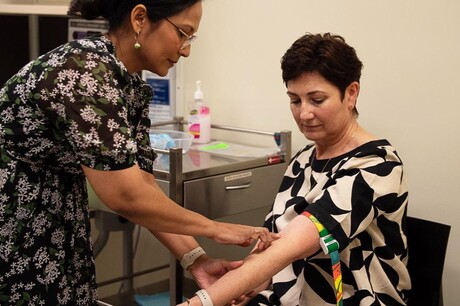
Postmenopausal women between the ages of 50 and 74 with intact ovaries, and no prior history of ovarian cancer, are being encouraged to enrol in a UQ study.
Around 1500 women will be recruited from across Queensland to take part in The University of Queensland’s EARLY study, which will collect blood samples to evaluate the impact of shipment and storage on the stability of ovarian cancer biomarkers.
The approach focuses on extracellular vesicles (EVs) — microscopic bubbles naturally released by cells that carry protein and genetic information — that can signal the presence of cancer, said Professor Carlos Salomon Gallo, Director of the UQ Centre for Extracellular Vesicle Nanomedicine.
“Our aim is to systematically evaluate the impact of blood collection protocols, storage temperatures, transport conditions and time-to-processing on EV biomarker stability,” Gallo said. “This will allow us to establish a standardised specimen-handling protocol for the test under real-world conditions.
“Ovarian cancer is one of the most serious cancers affecting Australian women — about 2 out of 3 are diagnosed when the disease is already advanced, when treatment is more complex and survival rates are poor,” Gallo added. “Rapid and accurate identification of asymptomatic ovarian cancer will dramatically improve survival rates.”
To develop and commercialise the EV-based ovarian cancer screening test, UniQuest — UQ’s commercialisation company — has exclusively licensed the technology to biotechnology company INOVIQ Ltd. It has demonstrated 100% detection of early-stage (I and II) ovarian cancer, UQ said, evaluated on more than 500 blood samples.
“Another advantage of this test is the extremely low false positive rate of 0.4% in recent studies which makes it a potential candidate as a screening tool,” Gallo said.
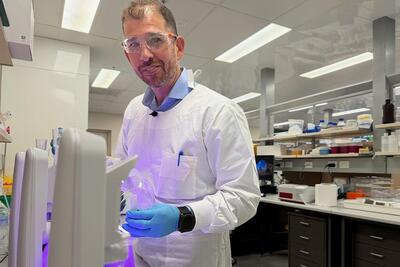
Fewer than half of women are alive five years after diagnosis; however, as Professor Andreas Obermair from the UQ Centre for Clinical Research explained, when ovarian cancer is found early, cure rates are very high.
“As a surgeon, I look after women with ovarian cancer every week and, too often, I meet them for the first time when the cancer is already advanced, something we urgently need to change,” Obermair said. “And women in rural and regional Australia are more likely to be diagnosed later and face greater barriers to specialist care.
“This study relies on women volunteering to donate a small blood sample and some basic health information — it is quick, safe and free,” Obermair added. Ovarian Cancer Foundation CEO Robin Penty said it is a significant milestone towards early detection and screening for ovarian cancer.
The five-year project has received grants from the National Health and Medical Research Council (NHMRC) in partnership with the Ovarian Cancer Research Foundation and the Lions Medical Research Foundation, and in collaboration with Mater Research and Queensland Centre for Gynaecological Cancer Research.
A pathology request form will be given to participants, who can have the blood test done at a convenient collection centre or at the UQ Centre for Clinical Research. More information, including how to enrol in the study, is available at gyncan.org/our-research/current-trials/early-study.
Could this 'nanobone' material allow children to regrow bone?
Australian scientists believe they have found an alternative to invasive bone graft procedures in...
The last mile of life sciences innovation
How do we translate technological possibility into meaningful real-world impact?
Machine learning uncovers patterns in DNA methylation
A new machine-learning method identifies differentially methylated DNA regions without sample...