Could a vaccine for Alzheimer's be on the way?
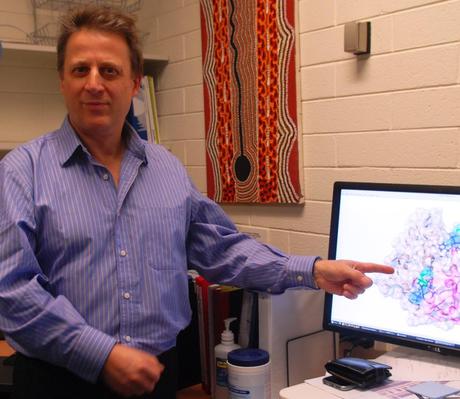
Flinders University researchers have contributed to a breakthrough in the quest to discover a vaccine targeting the pathological proteins associated with Alzheimer’s disease (AD). The discovery comes as more than 7.5 million new cases of AD emerge every year, with the urgency to find an effective treatment growing by the day.
“Along with our rapidly ageing populations, we now know that the explosion in type 2 diabetes in the West is likely to further dramatically fuel the projected rise in the number of cases of dementia globally, with diabetes being the major risk factor for Alzheimer’s disease,” noted Flinders University Professor Nikolai Petrovsky, who is also the director of South Australian vaccine research company Vaxine.
Now, Professor Petrovsky and other Flinders researchers have joined a research team at the Institute of Molecular Medicine (IMM) and University of California, Irvine (UCI) in creating a vaccine formulation that targets the abnormal beta-amyloid and tau proteins that signal AD. β-amyloid (AB) is a protein found to be prominent in driving AD, but the accumulation of pathological tau also correlates with the formation of dementia in Alzheimer’s patients.
The universal vaccine platform, called MultiTEP, used a combination of anti-amyloid-beta and anti-tau vaccines with powerful and safe adjuvant technology called Advax, developed by Vaxine. As explained by Professor Michael Agadjanyan, head of the IMM Department of Molecular Immunology, the vaccines generate antibodies that “bind strongly to the amyloid and tau pathological molecules in brain tissue from AD patients”.
“This study suggests that we can immunise patients at the early stages of AD, or even healthy people at risk for AD, using our anti-amyloid-beta vaccine, and, if the disease progresses, then vaccinate with another anti-tau vaccine to increase effectiveness,” added study co-author Associate Professor Anahit Ghochikyan, also from the IMM Department of Molecular Immunology.
Associate Professor Ghochikyan said IMM scientists and collaborators from UCI and the University of Southern California are working with experts from four companies to conduct non-clinical safety-toxicology studies to fulfil US Government safety standards for the Investigational New Drug application. After completion of these preclinical studies, they plan to test the immunogenicity and efficacy of the new vaccines in human trials.
“If we are successful in preclinical trials, in three to five years we could be well on the way to one of the most important developments in recent medical history,” said Professor Petrovsky.
The research findings have been published in the journal Scientific Reports.
Award-winning system automates vial filling for cell therapy
Celleo's Larkem V40 — created to address one of the bottlenecks holding back cell...
Air pollutant exposure linked to glaucoma, cataracts and suicide
People who are exposed to high levels of air pollution are more likely to develop glaucoma and...
Could this 'nanobone' material allow children to regrow bone?
Australian scientists believe they have found an alternative to invasive bone graft procedures in...