Epigenetics shows how pregnancy can lead to breast cancer
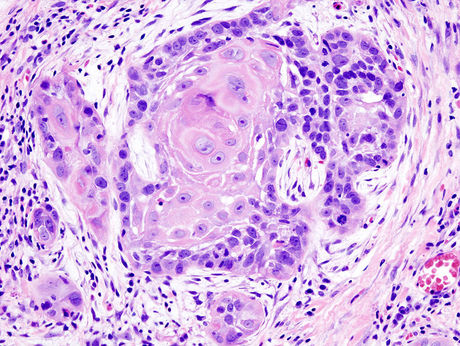
A new study shows how pregnancy hormones can change the epigenome of breast cells, causing cells to become cancerous.
Breast cancer is the most common cause of cancer in women, accounting for almost 30% of all cancers affecting women. One in nine women in Australia will develop breast cancer by the age of 85.
Now a research team from the Walter and Eliza Hall Institute has shown how hormones released during pregnancy can alter the gene expression of breast cells, causing them to become cancerous.
The finding sheds light on why breast cancer is so prevalent in women, especially as they age and the accumulation of hormone exposure increases.
The team, led by Professor Jane Visvader, Dr Bhupinder Pal, Professor Geoff Lindeman, have been working to produce a map of the epigenomes of various breast cell tissues.
Working with bioinformaticians at the institute, they were able to see how these epigenomes were changed in response to ovarian hormones such as progesterone, which is released in amplified levels during pregnancy.
“We found the epigenome was very sensitive to hormonal regulation,” Visvader said. “This reveals another way in which female hormones can influence breast cancer risk - by altering the epigenome through modifications in DNA tags.”
The hormones were found to alter the gene expression of the breast cells, leaving the underlying genetic code unchanged, but changing the way the cell functions and grows.
Specifically, the hormones activated EZH2, a molecule that is important in modifying the epigenome.
“We found that hormones including progesterone activate EZH2 to modify the epigenome, leading to global changes in the expression of a huge number of genes,” said Visvader.
“In normal tissue, EZH2 is essential for the development of breast tissue including ducts and milk-producing cells, and for maintaining the activity of breast stem cells and their daughter progenitor cells.”
High levels of EZH2 are a marker of poor prognosis in breast cancer and have been frequently observed in basal-like breast cancers, the most aggressive types of breast cancer.
“The link between progesterone, EZH2 and the epigenome could be crucially important in the very early stages of breast cancer development,” said Visvader.
According to Professor Lindeman, there is decades of evidence linking hormone exposure with breast cancer, but the hormones’ influence on the epigenome was not known.
“Our discovery points to a role for hormone-induced changes in the epigenome in the early stages of breast cancer initiation and could lead to new therapeutics for treating breast cancer,” he said.
“Inhibitors against EZH2 are being developed by others, but it will be several years before we know the outcome of these on cancer.”
The research was published today in Cell Reports.
The last mile of life sciences innovation
How do we translate technological possibility into meaningful real-world impact?
Machine learning uncovers patterns in DNA methylation
A new machine-learning method identifies differentially methylated DNA regions without sample...
HRT linked to lower dementia risk in some women
Hormone replacement therapy may reduce the risk of dementia — particularly for certain...