How an Alzheimer's-linked protein shapes long-term memories
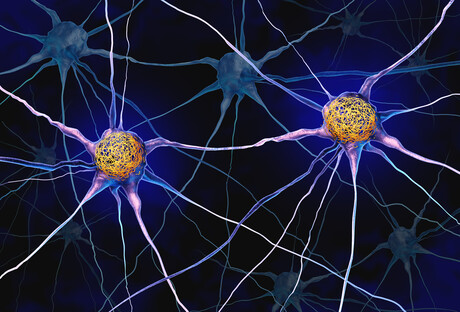
Tau, a protein widely associated with memory loss in dementia, has been shown to be essential for organising and stabilising memories so they persist over time.
A study focused on ‘remote memory’ in mice, which refers to memories recalled days or weeks after an experience, has found that while the Alzheimer’s-linked protein tau is not required for initial learning or short-term recall, it is critical for ensuring memories remain strong over the long term.
Led by Flinders University in collaboration with researchers from Macquarie University and the University of New South Wales, the observations of the study — published open access in Nature Communications (doi.org/10.1038/s41467-026-73207-9) — in mice do not directly translate to human brain function or dementia; however, the researchers believe the findings offer important insights that could help guide the development of future treatments.
“Why some memories last while others fade has long puzzled scientists and our study shows that tau plays a key role in how the brain forms long-lasting memories. Without it, memories can still form in the moment, but they are weaker,” said Associate Professor Arne Ittner from Flinders’ College of Medicine and Public Health, senior author and neuroscientist.

‘Engram cells’ are specialised groups of brain cells and are at the heart of this process, forming the physical trace of a memory. Only a small subset of these cells is recruited to store a given experience during learning, the researchers explain, with the study showing that tau acts during this critical encoding window, helping determine which cells are selected to store a memory.
“Our findings show that tau helps determine which cells are selected to store a memory, shaping how an experience forms a lasting memory trace,” said one of the lead authors, Renée Kosonen, a researcher at Flinders’ Neuroscience and Dementia Research. That tau helps prevent excess or ‘noise’ activity in the brain, allowing only a specific group of cells to become part of the memory trace, was an important finding, the researchers said — resulting in clearer, more stable memories.
Further, it was observed that tau undergoes phosphorylation, a subtle chemical modification, which helps coordinate the activity of engram cells. Although a hallmark of Alzheimer’s disease is abnormal tau phosphorylation, controlled, low-level phosphorylation, the study suggests, plays an essential role in normal brain function.
The researchers said that the study also provides insight into how, in dementia, abnormal tau disrupts memory. During learning, when disease-associated forms of tau were present in engram cells, they interfered with the formation of new memories, the researchers said, and when present later, they disrupted the brain’s ability to access existing memories.
“Knowing how tau supports the formation and recall of memory could help us better understand what goes wrong in memory loss,” Ittner said. “Future research will hopefully be able to confirm concepts developed in our study in human memory and show their implication in dementia.”
Air pollutant exposure linked to glaucoma, cataracts and suicide
People who are exposed to high levels of air pollution are more likely to develop glaucoma and...
Could this 'nanobone' material allow children to regrow bone?
Australian scientists believe they have found an alternative to invasive bone graft procedures in...
The last mile of life sciences innovation
How do we translate technological possibility into meaningful real-world impact?