Proteomics promises vaccine for pig pneumonia
Slowing and preventing the development of Mycoplasma hyopneumoniae (Mhp), the pathogen that causes enzootic pneumonia (EP) in pigs, may soon be at hand with researchers taking a unique proteomics approach to this problem.
A team led by Professor Steve Djordjevic from the ithree institute at the University of Technology Sydney and Dr Cheryl Jenkins from the NSW Department of Primary Industries (DPI) combined molecular biology, biochemistry, proteomics and imaging in research on this respiratory pathogen.
It is estimated that losses due to pig pneumonia in Australia amount to $20 million per year. Pigs infected with the Mhp bacteria have significantly reduced growth rates and are vulnerable to secondary infections.
Further, current vaccines against Mhp are expensive to produce and administer, and fail to prevent the colonisation of the respiratory tract.
Mhp is a genome-reduced bacterium that needs to hijack functions of its host to survive. In this case it uses a protein known as MHJ_0125 to sequester amino acids from the host cell as a source of food.
Using genome-wide conceptual-neutral proteomics analysis, the researchers began looking at the surface proteins of the Mhp bacteria and how they interact to enable Mhp to colonise its host and develop disease.
The research revealed that in addition to this food sequestering function, MHJ_0125 moonlights as a virulence factor triggering a process in the respiratory tract of the pig that facilitates infection.
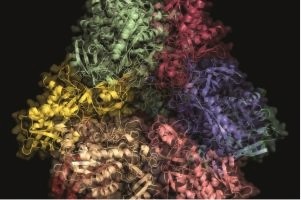
Computer modelling helped resolve the 3-dimensional structure of the MHJ_0125 protein, which forms a functional complex of 12 individual parts.
The next step the researchers have planned is to design vaccination trials that include this protein as a component in a vaccine cocktail against this infectious agent.
The research findings were published this week in Open Biology.
Could this 'nanobone' material allow children to regrow bone?
Australian scientists believe they have found an alternative to invasive bone graft procedures in...
The last mile of life sciences innovation
How do we translate technological possibility into meaningful real-world impact?
Machine learning uncovers patterns in DNA methylation
A new machine-learning method identifies differentially methylated DNA regions without sample...