Sensor's cell-like structure said to overcome key blood-testing barrier
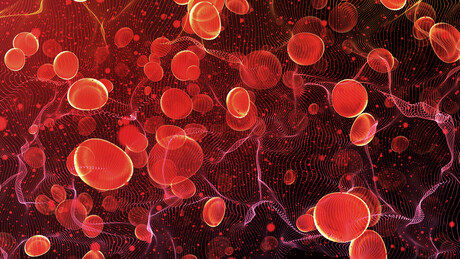
Drawing inspiration from nature, Australian researchers have developed a sensor they believe overcomes one of the biggest barriers in blood testing.
Blood quickly clogging most sensors and making accurate instant readings almost impossible over long periods is, according to a team led by La Trobe University, one of the biggest barriers in blood testing. This same team, drawing inspiration from nature, believe they have overcome this with a sensor that can rapidly track tiny molecular changes in blood, paving the way to real-time, personalised medicine. Their findings were published open access (doi.org/10.1021/acssensors.6c00192) in ACS Sensors in March.
To mimic the way real cell surfaces protect themselves and sense molecules, the La Trobe team — in collaboration with CSIRO — combined a natural protective coating called lubricin, fast-responding receptors and an ultra‑sensitive, light‑based detection method known as Surface‑Enhanced Raman Scattering (SERS). SERS was used by the team to detect the antibiotic Vancomycin in unprocessed blood samples — without any loss in sensitivity over more than 10 hours of continuous exposure.
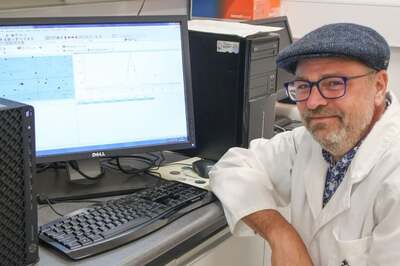
“Blood is one of the hardest substances to measure anything in,” said Dr Wren Greene, La Trobe University Associate Professor and research lead. “The secret to our sensor is its cell-like structure which filters the molecules from blood, enabling ultra-sensitive SERS detection.” Greene added: “Our sensor greatly expands the detection range, allowing us to measure hormones, toxins and other biomarkers that appear only at low concentrations. This is critical for early disease detection and monitoring the body’s response to treatments.
“This discovery also advances the scientific field itself, demonstrating a way to overcome the longstanding trade-off between high sensitivity and fast response in molecular testing,” Greene said. On the significance of the sensor, CSIRO’s Dr Mingyu Han, research co-leader, said other sensors had detected Vancomycin but this was 100 million times more sensitive, making it the first practical, real-time SERS sensor capable of working inside a fluid like blood.
Air pollutant exposure linked to glaucoma, cataracts and suicide
People who are exposed to high levels of air pollution are more likely to develop glaucoma and...
Could this 'nanobone' material allow children to regrow bone?
Australian scientists believe they have found an alternative to invasive bone graft procedures in...
The last mile of life sciences innovation
How do we translate technological possibility into meaningful real-world impact?