'Mini brains' mimic MS myelin damage
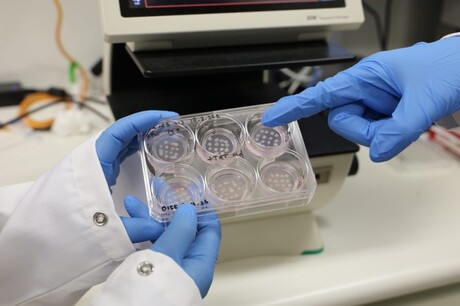
Scientists from Australia and New Zealand have developed 3D ‘mini brains’ they hope will help speed up the search for much-needed drug treatments for multiple sclerosis (MS) — an autoimmune condition affecting almost three million people worldwide.
Led by The Florey Institute of Neuroscience and Mental Health and Monash University, the team used reprogrammed adult stem cells to engineer a human-like central nervous system cell model, which is the size of a grain of rice. These MS organoids give researchers a highly detailed cellular view of myelin destruction (demyelination) and regeneration (remyelination) in human cells, as detailed in the journal Nature Neuroscience.
Myelin is a fatty sheath that covers and protects nerve fibres and allows messages, via electrical impulses, to travel quickly around the brain, spinal cord and the rest of the body. In MS, the immune system mistakenly attacks myelin, causing nerve damage, neurological symptoms and, over time, disability. There are no therapies available that repair this damage; existing MS medications are only able to treat symptoms and slow progression.
“In science, we typically use rodents to model diseases for research, but drugs identified to work in these models of disease are rarely effective in people, so creating more human-relevant model systems is important,” said Associate Professor Samantha Barton, who leads the Myelin in Health and Disease Group at The Florey.
“The relevance of our new system is significant. In addition to generating myelin, we have been able to introduce immune cells to trigger injury similar to MS. This gives us the unique opportunity to study the regenerative process of remyelination in the laboratory.
“This model can help researchers better understand what drives myelin damage and repair in MS and it also gives us a new platform to screen drugs that protect or restore myelin.
“The dream is to find new ways to slow or prevent MS progression.”
According to the researchers, the cell model will allow them to see drugs working in near-real time on human cells, enabling them to explore potential therapeutics that may directly improve endogenous repair processes by human cells and thus leading to better treatments for diseases like MS.
“We are excited at the prospect of using our new system to identify therapeutics that can actually boost the limited ability we humans all possess to repair our electrical insulation in the central nervous system,” said co-senior author Associate Professor David Gonsalvez, from Monash University.
First author Dr Shwathy Ramesan, a postdoctoral fellow at The Florey, added, “After years of developing and refining this model, it’s exciting to see it provide a window into human myelin biology that wasn’t previously available. We hope it becomes a valuable tool not only for our team but for researchers studying MS around the world.”
Fast-aging placentas may contribute to pre-eclampsia
Placentas affected by pre-eclampsia show several signs of accelerated aging, including increased...
BioNTech opens mRNA manufacturing facility at La Trobe
Offering state-subsidised access to researchers and biotech startups, the facility aims to enable...
Personalised melanoma vaccine cuts risk of recurrence
Adding a personalised, mRNA-based cancer vaccine to standard immunotherapy after surgery for...