Australia’s first Biohackathon
Australia’s first Biohackathon will be held over two days at ATP Innovations in Sydney on 19-20 April 2013.
The Biohackathon will open up a scientific problem to the public with the aim of generating a solution to this problem within a short period of time.
Students and citizen scientists from a range of disciplines will come together to work on tackling a problem affecting Australian hospital systems - developing ways to better detect biofilms.
Biofilms or aggregations of bacteria are usually found on solid surfaces and contribute to the majority of hospital-acquired infections. The dense protective environment of a biofilm provides a safe space for bacteria to grow, cooperate and interact. This can result in increased lateral gene transfer and growth of antibiotic-resistant bacteria.
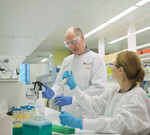
Eleven multidisciplinary teams made up of 45 people will use lab space at ATP Innovations, a technology business incubator, to try and come up with novel and improved methods of detecting biofilm in the hospital environment.
The teams will include students and citizen scientists in dentistry, medicine (microbiology, genetics, immunology etc), physics, design, visual arts, law, engineering (electrical, bio and chemical), business and pharmacy.
Start-up company Ninja Blocks will provide participants with its tiny cloud-enabled computers to aid their biohacking.
Cochlear, a leading expert in implantable hearing solutions, is sponsoring a cash prize of $3000 for the event.
Applications have closed for the event but registrations to attend a networking function at ATP innovations on 19 April are still open.
For more information, visit Biohackathon 2013.
Scientists uncover how cancer cells hide from immune system
By targeting the RNA helicase known as DDX6, scientists could enable the immune system to...
Vanillin flavouring in vapes may disrupt embryo development
Vanillin — a common flavouring chemical in e-cigarettes — may disrupt the normal...
Heart valve tissues created from stem cells
The breakthrough should help advance our understanding into how human heart valves develop,...