Babies of stressed mothers likely to get their teeth earlier
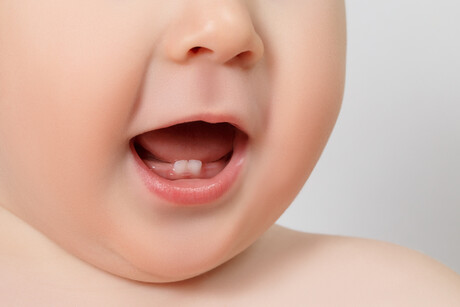
Milk teeth begin to develop for children in the womb around the sixth week of gestation, and gradually come out (‘erupt’) between six months and three years after birth. However, there is considerable variation in this timing, due to genetics, geography, and an infant’s overall health and nutritional status. Now, researchers from the US have shown that maternal stress during pregnancy can speed up the timing of teeth eruption, which may be an early warning sign of faster biological aging.
The University of Rochester’s Dr Ying Meng and colleagues studied a cohort of 142 mothers in the US from socioeconomically disadvantaged backgrounds, who were pregnant between 2017 and 2022 and enrolled through the university’s medical centre. In the late second and third trimesters of pregnancy, each woman gave a saliva sample, in which the concentration of the hormones cortisol, oestradiol, progesterone, testosterone, triiodothyronine and thyroxine was measured.
All children in the study were born at full term. At one, two, four, six, 12, 18, and 24 months after birth, each mother–child pair visited the clinic, where dentists assessed which milk teeth had erupted. The results were published in Frontiers in Oral Health.
By six and 12 months of age, respectively, 15% of children had between one and six erupted teeth while 97.5% had between one and 12. Importantly, women with higher levels of the stress hormone cortisol in their saliva had offspring with a greater number of erupted teeth by six months of age. Infants of mothers with the highest level of cortisol had on average four teeth more at this age than infants of mothers with the lowest cortisol levels.
“High maternal cortisol during late pregnancy may alter fetal growth and mineral metabolism, including the regulation of levels of calcium and vitamin D — both essential for mineralisation of bone and teeth,” Meng said. “Cortisol is also known to influence the activity of so-called osteoblast and osteoclast cells, responsible for building up, shaping and remodelling bone.
“These results are further evidence that prenatal stress can speed up biological aging in children. Premature eruption of teeth could thus serve as an early warning sign of an infant’s compromised oral development and overall health, associated with socioeconomic deprivation and prenatal stress.”
The authors also found an association between a mother’s level of the sex hormones oestradiol and testosterone and a greater number of erupted teeth in her child at 12 months after birth, but this link appeared to be weaker. Similar weak yet statistically significant positive associations were found between a mother’s level of progesterone and testosterone and her child’s number of teeth at 24 months, and between her level of the thyroid hormone triiodothyronine and the child’s number of teeth at 18 and 24 months.
Oestradiol, progesterone and testosterone are known to play important roles in fetal development and birthweight, which is how high levels of these hormones might speed up tooth eruption.
“We still have key questions that need answering; for example, which maternal hormones or downstream developmental pathways drive the change in the timing of tooth eruption, what the exact relationship is between accelerated eruption of teeth and biological aging and development, and what such speeding up says about a child’s general health,” Meng said.
Maternal diet doesn't affect baby's food allergy risk
Higher maternal consumption of egg and peanut during pregnancy and breastfeeding does not protect...
Overuse of inhalers can increase heart attack risk
Overuse of reliever inhalers is associated with higher risks of developing and dying from...
Unhealthy Western diet could accelerate cognitive decline
An unhealthy Western-style diet is associated with a faster cognitive decline in people with a...