CBio opens new labs, outlines development plans
Thursday, 30 June, 2005
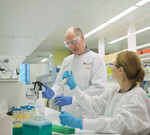
Brisbane biopharma CBio has broken the proverbial bottle of champagne over the bows of its new laboratory and office premises at Brisbane Technology Park, and with Commonwealth P3 grant in hand, is ready to "forge ahead" with developing its novel anti-inflammatory molecule, the heat-shock protein Cpn10 (Chaperonin 10).
CEO Dr Wolf Hanisch said that under the P3 (Pharmaceutical Partnerships Program) grant scheme, CBio is eligible for four years of government funding up to AUD$6 million, on the basis of committing to spend of $33 million on research from the discovery phase through clinical trials, including manufacturing to international standards.
Federal Industry, Tourism and Resources Minister Ian Macfarlane opened the company's new premises yesterday -- and not before time, according to Hanisch.
"We signed up two and a half years ago to be an anchor tenant in the Queensland government's proposed Bioaccelerator facility, and moved into temporary premises out in the doldrums, expecting to be in within six months," he said. "It was more than a bit cramped, but now we've got plenty of room for our office and laboratories."
The company's lead compound is currently in a Phase IIa trial in multiple sclerosis patients at Griffith University's Gold Coast campus, and at the Royal Adelaide Hospital.
Hanisch said the molecule targets Toll-like receptors on the surface of pro-inflammatory immune system cells including dendritic cells, macrophages and monocytes, modulating their inflammatory.
Toll-like receptors are a class of around a dozen cell-surface proteins that 'recognise' different classes of infectious agents such as bacteria, viruses and parasites, and other foreign molecules, selectively activating the appropriate immune responses.
It reproducibly reduces indicators of inflammation including TNF-alpha, while inducing an increase in anti-inflammatory cytokines.
"On the hypothesis that all auto-immune diseases manifest as chronic inflammation, we expect it to be active for rheumatoid arthritis and inflammatory bowel disease [Crohn's disease]," Hanisch said. "Now that we've got a reasonably good handle on the action of Cpn10 on Toll-like receptors, it opens the way to develop other molecules with similar modes of action."
Unhealthy Western diet could accelerate cognitive decline
An unhealthy Western-style diet is associated with a faster cognitive decline in people with a...
Cancer drug enters clinical trials based on a false mechanism
A cancer drug currently being tested in patients appears to have entered clinical trials based on...
Russia insists there is "no plague case" following lab worker death
Russian health authorities say there is no evidence that pneumonic plague played a part in the...