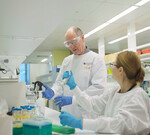
Research project to produce fish-free omega-3

Researchers at Southern Cross University (SCU) have set out to halve the cost of producing omega-3 supplements, in order to make these essential nutrients more accessible to pregnant women and infants in low-income countries. The research takes a rather novel approach: instead of relying on fish oil, the team is going closer to the original source of omega-3.
Fish don’t produce omega-3 themselves — rather, they accumulate it from marine microorganisms lower in the food chain. Led by Professor Dirk Erler from SCU’s Faculty of Science and Engineering, the team is investigating how to grow these naturally omega-3-producing microorganisms more cheaply through precision fermentation, including by using agricultural and food-processing by-products to provide the sugars they need to grow.
Omega-3 fatty acids, particularly DHA, are important during pregnancy and early development, with DHA accumulating rapidly in the brain and retina during the third trimester. Research has also shown a link between omega-3 supplementation during pregnancy and a reduced risk of preterm birth.
“The main barrier for the uptake of omega-3s as supplements in pregnant women is the cost,” Erler noted.
“The whole objective of our project is to reduce that cost and make omega-3 supplements more available.”
The research team at SCU is focused on growing omega-3-producing marine microorganisms known as thraustochytrids — or ‘throstys’ for short. As explained by Erler, “By growing those microorganisms on land through precision fermentation, we have an alternative way of producing omega-3s that is both reliable and highly targeted.”
Precision fermentation allows the researchers to grow thraustochytrids under controlled conditions to produce omega-3 oils. The team is investigating whether expensive feedstocks used in the process can be replaced with lower-cost agricultural and food-processing by-products; their aim is to achieve at least a 50% reduction in the current production cost of omega-3 supplements.
If successful, the research could pave the way for commercialisation and wider adoption of the technology, with the potential to increase access to omega-3 nutrition in countries where cost remains a barrier. It could also reduce reliance on wild-caught fish as a source of omega-3 oil, thus creating a more reliable, scalable and local supply.
Ultimately the project is about what greater access to omega-3 could mean for women and babies, said biomedical scientist Dr Nedeljka Rosic.
“This project is important because it aims to improve the health of pregnant women and children and reduce preterm births through simple dietary improvements,” she said. “Healthier births can contribute to better long-term outcomes for children and communities.”
The work is being supported by Grand Challenges, an initiative of the Gates Foundation. The grant runs for 18 months and marks the first time SCU has ever received funding from the Foundation.
“Being funded by the Gates Foundation for such a project is an incredible honour,” Rosic said.
“To receive Southern Cross University’s first Gates Foundation grant for a project that has the potential to improve the health of women and children around the world makes us especially proud.”
Biodegradable smart patch can detect and treat blood clots
Researchers have developed a biodegradable smart patch that detects pressure changes and releases...
Biotech manufacturing facility opens in Brisbane
ENTRI, a purpose-built multimodal facility which will enable biotech companies to manufacture...
Maternal diet doesn't affect baby's food allergy risk
Higher maternal consumption of egg and peanut during pregnancy and breastfeeding does not protect...