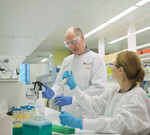
Federal funding recieved for foot and mouth monitoring
Wednesday, 03 July, 2002
CSIRO's Australian Animal Health Laboratory (AAHL) has received $1 million from the Federal government to improve systems for prevention of foot and mouth disease (FMD) outbreaks in Australia.
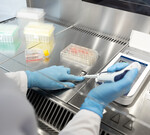
The funds will be used to automate the AAHL's sample tracking, testing and reporting systems, by providing robotic systems for sample handling and testing activities, and an information management system to facilitate reporting of results, said AAHL's FMD coordinator Laurence Gleeson.
Making the announcement at the AAHL, Federal Science Minister Peter McGauran said that the funding would boost resources and help to prepare Australia for a serious animal disease outbreak.
"While we are going to great lengths to prevent any exotic diseases from entering our shores in the first place, making sure we have the capacity to undertake quick and effective testing is a critical part of successfully responding to an outbreak," McGauran said.
"AAHL is Australia's premier animal disease diagnostic laboratory and will be the principal facility involved in sample testing in the advent of an outbreak."
A national simulation exercise of a FMD outbreak called Exercise Minotaur will be staged in September this year. However, Gleeson said that the new automated system would probably not be up and running until the end of this year.
He explained that it would take some time to program and configure the system for the FMD testing procedure.
"This system clearly has to be established in peace time," said Gleeson.
According to Gleeson, the system would primarily be set up to perform FMD serological tests, although diagnostic tests for other diseases would be configured to run on the system, in part to allow the laboratory staff to become accustomed to it.
Gleeson said that there was very little routine testing for FMD performed in Australia, most was for quarantine and import services.
The funding comes on top of a previous grant of $500,000 to the AAHL last year to enhance FMD diagnostic capabilities.
Russia insists there is "no plague case" following lab worker death
Russian health authorities say there is no evidence that pneumonic plague played a part in the...
Scientists 'reprogram' tumour-supporting immune cells
The approach, by an Australian team, uses lipid nanoparticles to target a type of immune cell...
Existing medicines could help treat deadly childhood dementia
Australian researchers have identified several existing TGA‑approved medicines that could help...