The University of Sydney formalises cervical cancer elimination partnership
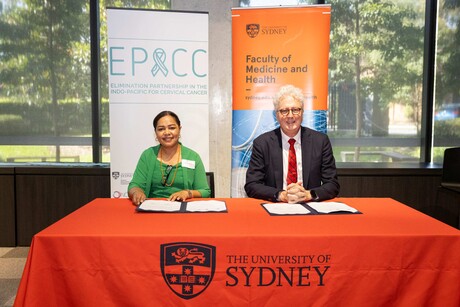
The University of Sydney has signed a memorandum of understanding with the Timor-Leste Ministry of Health. The signing was underpinned by the delivery of the Elimination Partnership in the Indo-Pacific for Cervical Cancer (EPICC) program in Timor-Leste, where the program has been supporting rollout of human papillomavirus (HPV) screen-and-treat services since 2025.
The University of Sydney Vice-Chancellor and President, Professor Mark Scott AO, said the program’s success to date reflects the power of research when combined with government leadership. “Cervical cancer remains a leading cause of death in women in many Indo-Pacific countries. Thanks to research co-led by the Cancer Elimination Collaboration team at the University of Sydney, there is now an evidence-based global strategy for its elimination,” Scott said.
A four-year initiative operating in nine countries across the Indo-Pacific region, the EPICC program is supported by the Australian Government and the Minderoo Foundation and was established to accelerate progress towards the elimination of cervical cancer, in alignment with the World Health Organization’s global elimination strategy — a strategy underpinned by modelling studies co-led by Professor Karen Canfell AC, Program Lead for EPICC and head of the Cancer Elimination Collaboration in the Faculty of Medicine and Health at the University of Sydney.
“For a young nation like Timor-Leste, partnerships of this nature are transformative,” said Dr Elizabeth Leto Mau, Director General of Primary Health Care in the Timor-Leste Ministry of Health. “They allow us to strengthen national systems, and apply world-class evidence and innovation in ways that are adapted to our local context.”
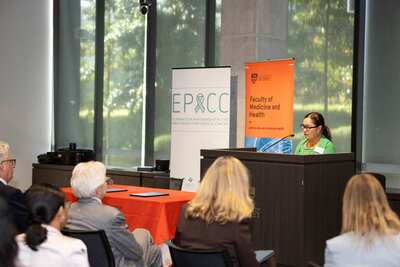
EPICC’s work in Timor-Leste is led by Professor Deborah Bateson AM and supported by EPICC consortium members, including Family Planning Australia, the Australian Centre for the Prevention of Cervical Cancer, the Kirby Institute at UNSW Sydney, the National Centre for Immunisation Research and Surveillance, and Unitaid.
Existing medicines could help treat deadly childhood dementia
Australian researchers have identified several existing TGA‑approved medicines that could help...
Statins reduce heart attack and stroke risk in older people
It has previously been unclear whether statins were effective in reducing heart attack and stroke...
Heart muscle regeneration genes mapped
Researchers have uncovered insights into how stem cells develop and mature into heart muscle...