What journalists expect from the scientists they speak to
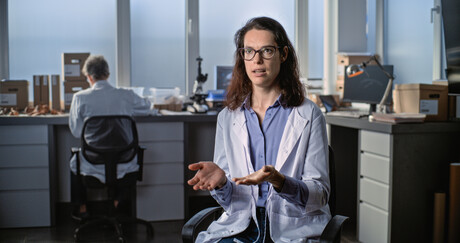
Science journalists spend a lot of time explaining work that is still in a position where it can be challenged as part of the scientific process, often to audiences who expect neat conclusions. That tension shapes how reporting actually happens, and it quietly shapes what journalists expect from the scientists they speak to. Here, the founder of a science PR agency outlines what those expectations look like in practice.
Anyone who has been through peer review knows that the most useful comments are rarely the most comfortable. They focus on what still needs explaining, often circling places where confidence has crept ahead of the evidence. Science journalists tend to approach spokespeople in much the same way, not as critics looking for faults, but as readers trying to understand what holds up once the work is examined closely — as illustrated by recent coverage in The Guardian questioning how evidence around microplastics is interpreted and presented.1
You can usually tell within the first few minutes how the conversation is going to go. Journalists listen out for how a scientist talks about their own work when it’s placed alongside what came before it, and alongside the probability of future critique, corrigendum or even retraction, and whether they seem at ease admitting what still isn’t clear. When that understanding comes through naturally, it gives a reporter enough confidence to keep moving, rather than stopping to double-check every claim later.
That moment often comes when a journalist needs to slow the conversation down, not to challenge the work, but to make sure they understand it well enough to explain it accurately.
Explanation, after all, is not the same as simplification. Journalists tend to expect scientific spokespeople to recognise that distinction, because it shapes whether a piece helps readers understand the work, or merely compresses it into something thinner than it should be.
That same instinct carries through once the interview ends. Journalists often come back with a short follow-up email, sometimes asking for a source, sometimes asking for a clarification that feels obvious to the scientist who wrote the article or paper or made the product claim. Those questions tend to surface when a journalist is thinking ahead to how a statement will be read once it is published.
Journalists also expect scientists to be able to talk about uncertainty without trying to smooth it away. As Ed Yong has written for The Atlantic, “uncertainty is not a flaw in science. It is a fundamental feature of it”.2 What matters in practice is whether a scientist can explain that uncertainty clearly enough for a reporter to decide how a finding should be framed, rather than leaving that judgement to implication.
Another expectation shows up once the work is public. Journalists assume that findings will be read closely and may be questioned by people who know the field well. A scientist who is comfortable with that level of attention, makes it easier for a reporter to reflect the work accurately without over-defending it on the page.
There is also an expectation around timing that shapes how accurately a story can be reported. Journalists often need to confirm a detail or sense-check an interpretation within a narrow window. When a scientist is available at that point, it reduces the chance that a reporter has to rely on inference or another source to keep the piece moving. Alternatively, they might simply pull the piece.
Another expectation is that scientists are able to stay close to what the work actually supports. Journalists are often trying to understand where a finding stops being consensus and starts becoming a subject for debate, especially when a result has implications beyond its immediate field. A spokesperson who can hold that line clearly makes it easier to report the work without stretching it into claims it was never designed to carry.
Peer review is often treated as the end of the story, but for journalists it is usually the point where the story becomes possible. Reporting sits alongside that process, not after it, which means conversations with scientists tend to happen while questions are still open rather than once they have been resolved sufficiently to be communicated. What journalists expect from scientific spokespeople is an understanding of that moment, and a willingness to talk about the work as it stands, without pushing it into a certainty it has not yet earned.
1. Mohdin A. ‘Thursday briefing: is your body really full of microplastics?’ The Guardian. 15 January, 2026. Accessed 29 January, 2026. https://www.theguardian.com/world/2026/jan/15/thursday-briefing-is-your-body-really-full-of-microplastics
2. Yong E. ‘Why the coronavirus is so confusing,’ The Atlantic. April 29, 2020. Accessed 29 January, 2026. https://www.theatlantic.com/health/archive/2020/04/pandemic-confusing-uncertainty/610819/
Could this human tissue biobank find the cause of a bowel cancer surge?
In a new Australian biobank, lab comparisons of tissue donated by cancer patients will explore...
Microscopic life is mining decades-old toxic waste
At abandoned Flinders Ranges mines, stable radioactive and toxic metals are being turned into...
Dual-bubble approach achieves microplastic removal rates of over 90%
Using a combination of microbubbles and nanobubbles, Australian scientists have developed a...