Project PEARL: safety findings of a lab ventilation systems comparison
Could this independent comparison test of lab ventilation systems under real-world stress conditions redefine standards for safety, efficiency and flexibility in life sciences labs?
Project PEARL (Performance for Efficient Airflow Regulation in Laboratories) — which purports to be the world’s first to compare different lab ventilation and air distribution systems under controlled, real-world conditions — has released results. Released by Siemens, the “comprehensive and independent study” on laboratory ventilation in the area of life sciences was conducted by Siemens together with H. Lüdi + Co. AG — a supplier of core components and system solutions for modern laboratories and a Siemens Xcelerator partner — between November 2024 and February 2025, with Lucerne University of Applied Sciences and Arts in Lucerne, Switzerland contracted as the independent research and testing institution to execute all measurement activities.
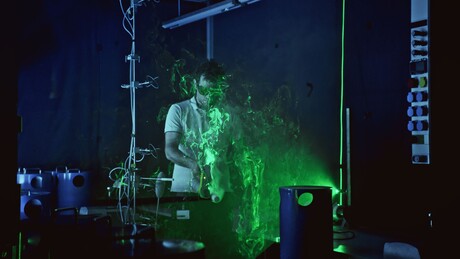
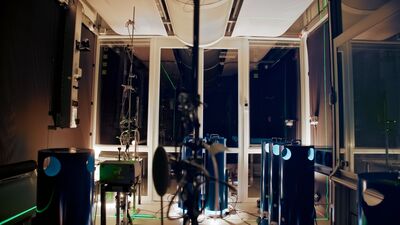
The study proceeded as follows. During the test phase, three different air supply systems were controlled and measured in seven different configurations under comparable situations and were stressed to their limits. A unique set of data insights for each system resulted, where specific situations can be compared, addressing various elements like safety and contamination control, user comfort, system flexibility, adaptability, and ventilation efficiency. According to Siemens, what was found is that precise control of airflow is paramount, leading to safer, more efficient, and comfortable lab environments.
“In fact, oversupplying air can disrupt controlled conditions, elevate costs and increase CO2 emissions,” Siemens stated in a release of findings. “Remarkably, some scenarios required less than half the volume of air, achieving 45% better ventilation efficiency and demonstrating superior removal of dangerous gases and heat. Better-controlled airflow also led to up to 29% faster recovery times after simulated spills, directly improving user safety and comfort.”
Project PEARL advocates a shift in lab space design — from designing for a single, specific use to creating flexible, next-generation environments capable of scaling from zero up to 300 watts per square metre. Such advanced systems are, the project believes, right-sized and well-controlled, delivering the exact amount of air needed to maintain safety and comfort while simultaneously saving energy and reducing emissions. As physical tests were conducted, a digital model of the complete project set-up was built by Siemens, including a simulation of the tests themselves.
“Comparing our project PEARL digital model with real-world measurements revealed amazing accuracy,” said Tim Walsh, Global Solution Director for Life Sciences at Siemens Smart Infrastructure. “This validated knowledge allows us to fine-tune and optimise performance, safety and comfort for future lab designs directly within their digital twin.”
Siemens says it has improved the Smart Lab Ecosystem (SLE) — a modular infrastructure kit that allows for the creation of highly adaptable and scalable lab environments that can be tailored to specific research needs, from basic research to high-containment facilities — based on the insights from project PEARL. The SLE enables, according to Siemens, up to 80% faster design and configuration of all types of lab environments up to bio-safety level 2.
On the project’s significance, Walsh deemed it “a game-changer for the laboratory industry”. “For the first time, we have real-world data that not only confirms our digital models but allows us to refine them and design laboratories that are truly optimised for safety, comfort and efficiency.”
Fuelled by R&D investments, biotech innovations and a growing pipeline of new drugs, the demand for laboratory space is on the rise in all key geographies. In the United Kingdom alone, for example, to cover predicted research needs estimates call for one million square metres of additional lab space in the next five years. This study’s findings, Siemens believes, help address the critical need for safer, more flexible and energy-efficient laboratories.
Brain Institute and Clinic unites research with patient care
The fight against some of the world's most devastating brain diseases has entered a new phase...
Sovereign capability: designing the infrastructure of translation
Research laboratories and scientific facilities were previously conceived as standalone assets...
Testing laboratory completes major upgrade
ALS's new base in Smithfield, in Greater Western Sydney, remakes a 20-year-old facility that...