'Smart bandage' heals and monitors simultaneously
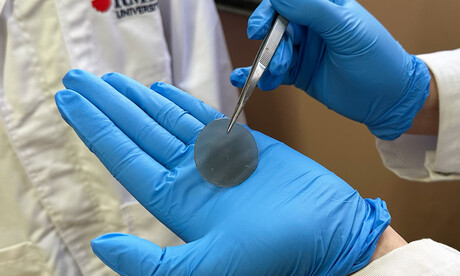
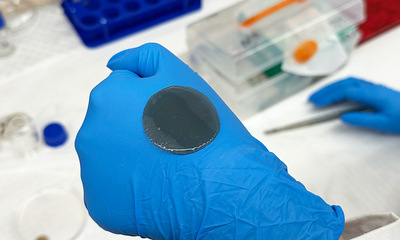
By embedding tiny, multi-functional nanomaterials into hydrogel dressing, this smart bandage promises to both treat and monitor wounds at the same time.
Due to the complexities of continuous and changing care required, chronic wounds cause significant burdens on healthcare systems. Emerging as potential solutions to this burden are smart wound dressings, which work by monitoring infection or delivering healing therapeutics. However, combining both monitoring and healing functions into one dressing has proven complex. Now, researchers at RMIT University believe they have created a simple, scalable platform able to deliver real-time monitoring and healing agents at the same time.
To serve the dual functions of monitoring and treating the wound, RMIT researchers have embedded tiny, multi-functional nanomaterials — known as carbon dots — into hydrogel dressing. The biocompatible carbon-based nanoparticles — carbon dots — can be used to image and sense changes in a wound and combat wound inflammation as therapeutic artificial enzymes (nanozymes), the new type of smart wound patch that will change colour when there is pH change in the wound caused by infection.
A portable smart device can read out the colour change and when these infection signals are detected, to promote healing the system automatically releases therapeutic nanozymes into the wound. By applying gentle pressure to the dressing, the release of these therapeutic nanozymes can also be manually triggered — allowing clinicians or patients to provide additional treatment, if required.
“Being able to address potential infection at the earliest opportunity is critical to chronic wound management, making this real-time system a potential game changer for health care,” said Nan Nan, RMIT PhD candidate and first author of the study. “Our fabrication process using medically ready materials, such as hydrogels, to embed carbon dots for wound dressing is easy and scalable, with strong potential for commercial translation.”
Dr Haiyan Li, collaborator and Senior Lecturer at RMIT’s School of Engineering, called it a promising and adaptive platform that overcame some of the barriers that have stopped smart wound dressings being brought to market. “Many smart wound dressings developed in research laboratories are difficult to translate into real clinical products because they rely on complex designs or expensive sensing systems,” Li said.
“Our approach integrates sensing and dual-mode therapeutic functions into a single dressing with a simple, streamlined design, which helps address some of the key challenges that have previously limited commercial translation,” Li added. “Importantly, this work has defined concise design rules for future smart dressings.”
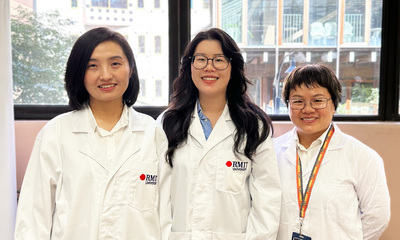
Initial studies were done at the lab scale, with validation in appropriate in vivo wound models being a key future step — the researchers looking to industry partnerships to refine and scale up the technology and bring smart wound patches to market. “Our next step is to evaluate how this technology performs in more advanced biological models and to work with industry partners to refine the design for real clinical use,” said Dr Lei Bao, study lead and Senior Lecturer at RMIT’s School of Engineering.
“Ultimately, our goal is to translate this research into practical smart wound dressings and integrate this smart platform into a digital health ecosystem, where the data from the patch is collected, analysed, and used to drive clinical decisions to advance chronic wound management,” Bao added. The research was conducted in RMIT’s Micro Nano Research Facility and Microscopy and Microanalysis Facility, with the study published open access (doi.org/10.1016/j.ces.2025.123225) in Chemical Engineering Science.
Award-winning system automates vial filling for cell therapy
Celleo's Larkem V40 — created to address one of the bottlenecks holding back cell...
Air pollutant exposure linked to glaucoma, cataracts and suicide
People who are exposed to high levels of air pollution are more likely to develop glaucoma and...
Could this 'nanobone' material allow children to regrow bone?
Australian scientists believe they have found an alternative to invasive bone graft procedures in...