Multiple myeloma treatment reprograms patients' own immune cells
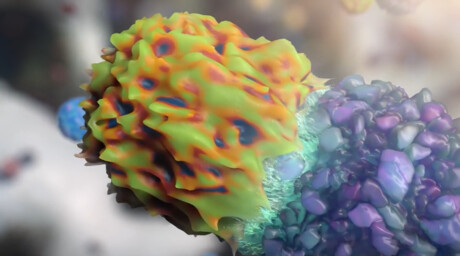
A funding agreement between the Australian Government, Victorian Government and Janssen-Cilag Pty Ltd (Johnson & Johnson) has allowed eligible Australians with multiple myeloma to gain access to a tailor-made treatment that uses patients’ own immune cells to fight the blood cancer.
Now, those who have exhausted other available treatments and meet certain criteria will be able to receive CARVYKTI (ciltacabtagene autoleucel) cell therapy, the CARVYKTI treatment that has begun at The Alfred and the Peter MacCallum Cancer Centre in Victoria — with access to the therapy to be expanded to other parts of the country once required arrangements are in place.
CARVYKTI is a personalised form of immunotherapy. It takes a patient’s own immune cells (T cells), re-engineers them in a laboratory and reinfuses them back into the patient so the reprogrammed cells are primed to recognise and kill cancer cells.
Johnson & Johnson points to research (doi.org/10.1111/imj.16277) that has shown half of all myeloma patients whose condition has progressed after four or more lines of currently available therapy will not survive beyond six months. According to Johnson & Johnson, this marks the first type of CAR (chimeric antigen receptor) T-cell therapy to be government-funded in Australia for people with multiple myeloma and will be provided at no cost to eligible patients.
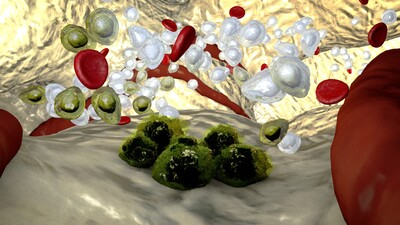
“Australia has one of the highest death rates from multiple myeloma in the world. This new treatment could not have come soon enough,” said Professor Andrew Spencer, Head of the Malignant Haematology, Transplantation and Cellular Therapies Service at The Alfred in Melbourne who is involved in clinical trials of CARVYKTI.
“The future of cancer treatment is personalised and targeted,” Spencer added. “This treatment is tailor-made for each patient using their own cells. It is a living therapy made to fight one specific patient’s cancer and can’t be used by any other patient.”
Johnson & Johnson said that CARVYKTI works to fight myeloma through the reprogrammed cells (known as CAR T-cells) which are targeted to identify and attach to a protein (called B-cell maturation antigen [BCMA]) located on the outside of myeloma cells. They then send chemical messengers to destroy the cancer cell. Also involved in clinical trials of CARVYKTI, and overseeing the collection of T-cells from the first patient enrolled for government-funded treatment, was Professor Simon Harrison — Director of the Centre of Excellence in Cellular Immunotherapy and Haematologist at the Peter MacCallum Cancer Centre in Melbourne.
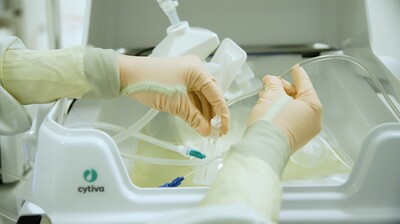
As Harrison explained: “even though the treatment is administered only once, the cells multiply up to 10,000 times post infusion and continue to work long afterwards”. “Each CAR T-cell product contains billions of cancer-fighting cells, and each CAR T-cell can kill up to 1000 cancer cells. It’s incredible that medical science has brought us to this point,” Harrison added.
Spencer said that this year alone approximately 200 Australians with multiple myeloma will learn that their cancer has returned or worsened after receiving four or more lines of treatment. Some, but not all, of these patients will be eligible for one-time treatment with CARVYKTI.
Phone: 1800 226 334
Terumo K-Pack Embrace active safety needle
The K-Pack Embrace active safety needle is packaged in a rigid cap and case container, designed...
Scientifica PatchPad Evo electrophysiology controller
Scientifica introduces PatchPad Evo, a next-generation electrophysiology controller that provides...
AdipoGen Cystatin C (mouse) (monomer):Fc (silent) InVivoKine fusion proteins
InVivoKines are a new generation of recombinant fusion proteins for immunotherapeutic,...