Could 'fusion proteins' reduce errors in a promising gene-editing tool?
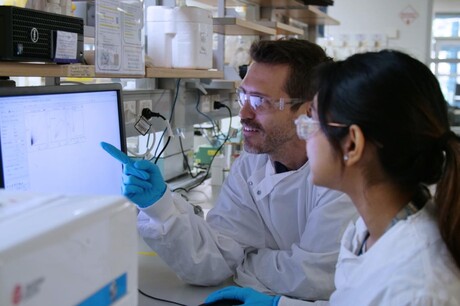
Gene-editing tool CRISPR-Cas9 is used, among many things, to engineer new cancer immunotherapies. Now, Australian scientists believe they’ve made it safer.
Though described as versatile, highly efficient and precise, gene-editing tool CRISPR-Cas9 — one of its key uses being to engineer cancer immunotherapies — can sometimes introduce gene mutations to cell products that pose a risk to patients. Now, biotechnology researchers at The University of Queensland (UQ) have developed a protein that, they say, has the potential to help the CRISPR-Cas9 system reduce errors when designing new immunotherapies for lymphoma and leukaemia.
“CRISPR-Cas9 is a highly efficient and precise tool, but it is not perfect,” UQ’s Dr Tahmina Tabassum said. “When it cuts DNA in the wrong place, you run the risk of introducing genomic instability.” Tabassum added: “In ex-vivo therapies such as CAR-T or CAR-NK therapies, this could mean nullifying the effectiveness of the treatment or even activating cancer-causing mutations.”
To combat the tool’s error rate when designing cell therapies, Tabassum together with her supervisors at UQ’s Australian Institute for Bioengineering and Nanotechnology — Professor Ernst Wolvetang and Dr Giovanni Pietrogrande — turned to ‘fusion proteins’ and their potential use as damage regulators for CRISPR-Cas9; designing and fusing the right protein to the CRISPR-Cas9 enzyme that, Tabassum said, meant it was possible to improve the precision of a DNA cut while stimulating the desired DNA repair.
“There are a lot of great labs that are designing different types of molecules to enhance the gene-editing ability of CRISPR; however, most small molecules are either not clinically translatable or focus on improving only the efficiency but not safety,” Tabassum said. “That’s why we designed CasPER — a gene-editing technology which is clinically translatable and safer to use.”
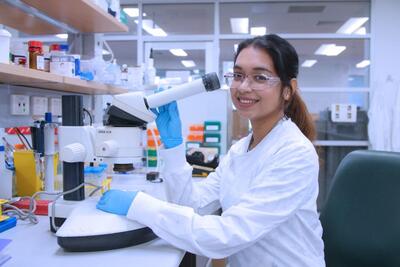
In several types of human cells, early testing showed that CasPER can edit genes more effectively than the CRISPR approach. And when it came to advanced immune therapies, such as CAR‑T and CAR‑NK cancer treatments, in which a patient’s own immune cells are re-engineered to find and destroy cancer cells, the researchers said results are particularly promising. A precision-editing score nearly four times higher than CRISPR-Cas9 was shown in CasPER’s results so far, as well as tenfold reduced off-target gene modifications.
“By reducing the overall mutation burden in edited cells, you are laying the groundwork for cell therapy products that are safer and more efficient,” Tabassum said. “Right now, this could mean better CAR therapies for blood cancers.” Tabassum added: “But it really opens the door to treatment for a number of diseases caused by genetic factors including rare diseases.”
To further develop CasPER, Tabassum said her team was seeking licensing and partnering opportunities that include using the technology in combination with other RNA-guided enzymes and therapies in which genetic material is directly delivered into – or removed from – a patient’s body, in order to treat or prevent blood diseases such as sickle cell anaemia and thalassaemia.
Could this 'nanobone' material allow children to regrow bone?
Australian scientists believe they have found an alternative to invasive bone graft procedures in...
The last mile of life sciences innovation
How do we translate technological possibility into meaningful real-world impact?
Machine learning uncovers patterns in DNA methylation
A new machine-learning method identifies differentially methylated DNA regions without sample...