Kinase profiling on the desktop
Wednesday, 25 April, 2007
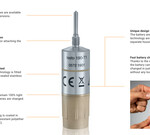
Caliper Life Sciences' Desktop Profiler is a bench-top system that enables therapeutic research laboratories to conduct in-house focused kinase profiling in a timely and cost-effective manner.
As biotech and pharmaceutical companies continue to explore the potential of kinases as viable drug targets, research scientists increasingly need to understand how drug candidates interact with the hundreds of different kinase enzymes present in the human body.
This 'kinase profiling' is necessary to identify potential side effects of therapeutic candidates.
Historically, cost constraints have limited the ability of therapeutic laboratories to conduct in-house profiling. The Desktop Profiler provides targeted research laboratories with a simple, affordable system to rapidly profile up to 13 compounds against a diverse kinase panel.
Caliper's technology directly measures product and substrate and does not require radioactive isotopes or high affinity, specific antibodies.
To ensure ease-of-use, the Desktop Profiler works in conjunction with ProfilerPro kinase panel kits. These consist of matched pairs of 384 well kinase assay and substrate plates.
ProfilerPro microplates are pre-loaded with kinases, substrates and reagents, eliminating assay development and reducing experiment set-up time.
Additionally, the Desktop Profiler utilises Caliper's LabChip microfluidic-based screening technology to yield high-quality reproducible data that helps researchers more confidently qualify drug candidates.
Millennium Science
Tel: 1800 678 242
Email: sales@mscience.com.au
www.mscience.com.au
Could this 'nanobone' material allow children to regrow bone?
Australian scientists believe they have found an alternative to invasive bone graft procedures in...
The last mile of life sciences innovation
How do we translate technological possibility into meaningful real-world impact?
Machine learning uncovers patterns in DNA methylation
A new machine-learning method identifies differentially methylated DNA regions without sample...