Revealed — a common bacterium's role in stubborn wound infections
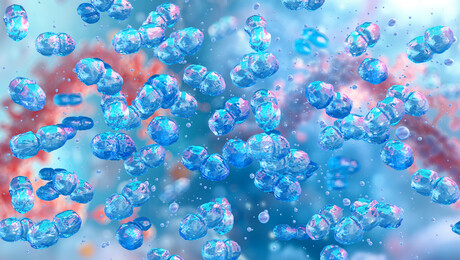
A team of international researchers have uncovered how a common bacterium, Enterococcus faecalis, can suppress the body’s early warning system in wounds.
Chronic wound infections are notoriously difficult to manage as some bacteria can actively interfere with the body’s immune defences. Now, a team of international researchers have uncovered how a common bacterium, Enterococcus faecalis (E. faecalis), can suppress the body’s early warning system in wounds — causing infections to persist and create an environment that allows other bacteria to take hold. E. faecalis is particularly resilient in wounds, being able to survive inside tissues, alter the wound environment and weaken immune signals at the injury site.
This creates conditions where other microbes can easily establish themselves, resulting in multi-species infections that are complex and slow to resolve. Diabetic foot ulcers and post-surgical infections are examples of such persistent wounds, which can sometimes lead to serious complications such as amputations and place a heavy burden on patients and healthcare systems. What the researchers found is that E. faecalis releases lactic acid to acidify its surroundings and suppresses the immune-cell signal needed to start a proper response to infection.
The bacterium can cause persistent and hard-to-treat wound infections by silencing the body’s defences. The team consisted of researchers from Singapore-MIT Alliance for Research & Technology’s (SMART) Antimicrobial Resistance (AMR) interdisciplinary research group alongside collaborators from SCELSE, at Nanyang Technological University (NTU Singapore), MIT (Massachusetts Institute of Technology) and University of Geneva, who published their findings open access (doi.org/10.1016/j.chom.2026.01.002) in Cell Host & Microbe.
“Chronic wound infections often fail not because antibiotics are powerless, but because the immune system has effectively been ‘switched off’ at the infection site. We found that E. faecalis floods the wound with lactic acid, lowering pH and muting the NF‑κB alarm inside macrophages — the very cells that should be calling for help. By pinpointing how acidity rewires immune signalling, we now have clear targets to reactivate the immune response,” said Dr Ronni da Silva, Research Scientist at SMART AMR, SCELSE-NTU Visiting Researcher and first author of the paper.
“This discovery strengthens our understanding of host-pathogen interactions and offers new directions for developing treatments and wound care that target the bacteria’s immunosuppressive strategies,” said Prof Kimberly Kline, Principal Investigator at SMART AMR, SCELSE-NTU Visiting Academic, Professor at UNIGE and corresponding author of the paper. “By revealing how the immune response is shut down, this research may help improve infection management and support better recovery outcomes for patients, especially those with chronic wounds or weakened immunity.”
Air pollutant exposure linked to glaucoma, cataracts and suicide
People who are exposed to high levels of air pollution are more likely to develop glaucoma and...
Could this 'nanobone' material allow children to regrow bone?
Australian scientists believe they have found an alternative to invasive bone graft procedures in...
The last mile of life sciences innovation
How do we translate technological possibility into meaningful real-world impact?