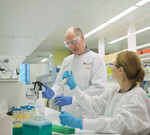
$9 million to treat heart failure and peanut allergies
Victorian medical technology companies Cardiora and Aravax have been awarded $9 million in venture capital funding from the Medical Research Commercialisation Fund (MRCF) to develop novel treatments for heart failure and peanut allergies respectively.
Cardiora will receive up to $4.15 million to pursue development of CRD-102, an oral medicine for the treatment of end-stage heart failure. Early studies indicate the drug is a potential new therapy to ease debilitating symptoms, including shortness of breath, fluid build-up and exercise intolerance. The Australian-developed drug will now be the focus of international clinical trials.
“Early trials of Cardiora’s CRD-102 have produced highly encouraging results, with the drug showing great potential as a new agent to improve the quality of life for millions of heart failure patients around the world,” said MCRF Investment Manager and Cardiora Director Dr Ingmar Wahlqvist.
“A new treatment for heart failure will potentially lower the economic burden of hospital admissions associated with this group of patients.”
Aravax has meanwhile secured $4.85 million to fast-track clinical development of a safe and effective vaccine for peanut allergies. Spearheading this program will be allergy researcher Professor Robyn O’Hehir, whose novel allergen immunotherapy approach has been used to create an international company now worth around $1.6 billion.
“Establishing Aravax means that we are able to harness Professor O’Hehir’s research output with Australian investment funds and keep Aravax in Australia,” said MRCF Investment Manager and Aravax Director Dr Chris Smith. “These funds allow us to capitalise on this country’s excellent expertise and infrastructure for conducting early-stage clinical trials.”
MRCF Principal Executive Dr Chris Nave said Cardiora and Aravax are “excellent examples” of home-grown medical research which the biotech industry should be looking to keep within Australia.
“This investment is a terrific example of how partnering great technologies with capital and the right expertise can facilitate the translation of Australian medical research,” he said.
Scientists 'reprogram' tumour-supporting immune cells
The approach, by an Australian team, uses lipid nanoparticles to target a type of immune cell...
Existing medicines could help treat deadly childhood dementia
Australian researchers have identified several existing TGA‑approved medicines that could help...
Statins reduce heart attack and stroke risk in older people
It has previously been unclear whether statins were effective in reducing heart attack and stroke...