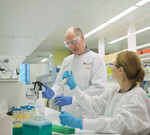
Cultivating hairy roots for herbal medicine
Wednesday, 19 June, 2002
A new technology for growing plant tissues in fermentation tanks may allow large-scale production of the bioactive components of herbal medicines like Echinacea, ginseng and Gynostemma.
According to Dr Philip Franks at Food Science Australia, the production of bioactive compounds in plants can be quite complex, requiring different cells to perform specific tasks in the synthesis of the molecules.
Franks believes that using differentiated plant tissue culture provides the right environment for producing bioactive compounds, and is working with hairy root cultures to develop them as a production system.
"They are surprisingly easy to grow. The real challenge is in scaling them up," he said. "To make it a commercially attractive proposal, you have to increase productivity."
Franks is focusing on production of the bioactives used in traditional Chinese herbal medicine, such as Echinacea and ginseng, in a project with the CRC for Bioproducts.
"These bioproducts are fairly complex compounds. They are difficult to synthesise," Franks said.
"A lot of traditional herbs are slow growing. The demand for ginseng root is increasing at a much faster rate than the ability to produce it."
According to Franks, there are a number of advantages to producing the bioactives in hairy root cultures. Number one on the list is the higher rate of production. Another advantage is the ability to get better consistency from batch to batch.
Franks is enthusiastic about the possibility of using the CRC for Bioproducts' 10,000 litre fermentation pilot facility once the fermentation process for the hairy root cultures has been optimised and scaled up.
"I'm very excited about the prospects for plant based production technology," he said, explaining that there was potential for the production of many compounds, including other bioactive compounds, food ingredients and pharmaceutical products.
"Wherever there is a plant derived bioactive substance that is difficult to grow, rare or very variable, there is an advantage," he said.
New gene therapy treats liver disorder in growing children
Researchers have developed a genome-editing approach that repairs a faulty gene directly at its...
High folic acid in pregnancy could cause early bleeding
Women taking at least 800 micrograms of folic acid daily were more likely to report spotting and...
Genetics shape our personality and life outcomes more than we thought
Scientists have identified >1200 genetic variants associated with personality traits,...