Don't throw out the placenta
The placenta and its resident stem cells are usually discarded after childbirth, but not any more.
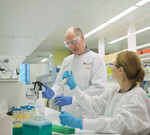
Researchers from The University of Queensland have worked out how to extract the abundant quantities of endothelial stem cells from the life-giving organ that connects the developing foetus to the maternal uterine wall.
Endothelial stem cells are present in large quantities in the placenta, but until now have not been able to be isolated in sufficient quantities for use in medicine.
And with each placenta reportedly containing enough stem cells to treat 100 patients, the researchers are positive about developing treatments in which they can use the stem cells.
“One of the therapies we are exploring will benefit patients with any condition where blood supply to tissues is severely restricted, such as heart issues,” said study leader Associate Professor Kiarash Khosrotehrani.
In the developing embryo, endothelial stem cells produce the endothelial cells that form the lining of the blood and lymphatic systems.
“We have recently discovered that endothelial stem cells form new blood vessels when injected into the body,” said Khosrotehrani, adding that lab experiments were looking promising.
“We have conducted experiments in mice with restricted blood flow and this has revealed that injected endothelial stem cells spur blood vessel growth and improve blood flow by up to 30 to 40% in just two weeks,” Associate Professor Khosrotehrani said.
“This therapy would be a real breakthrough for patients with conditions such as type 2 diabetes or ischaemia, where blood flow is restricted, resulting in intense pain, or wounds that won’t heal.”
The research is the subject of a patent application and the research team, with the support of UQ commercialisation company UniQuest, is seeking funding for clinical trials. The researchers hope to start clinical trials in humans in 2015.
Scientists uncover how cancer cells hide from immune system
By targeting the RNA helicase known as DDX6, scientists could enable the immune system to...
Vanillin flavouring in vapes may disrupt embryo development
Vanillin — a common flavouring chemical in e-cigarettes — may disrupt the normal...
Heart valve tissues created from stem cells
The breakthrough should help advance our understanding into how human heart valves develop,...