Existing medicines could help treat deadly childhood dementia
Australian researchers have identified several existing TGA‑approved medicines that could help slow brain damage in children with a rare form of dementia, offering hope for more treatment options. Their findings have been published in the journal Nature Communications.
The research, initiated by Sanfilippo Children’s Foundation and led by Flinders University in collaboration with SAHMRI, Adelaide University and Women’s and Children’s Hospital, focused on Sanfilippo syndrome — a devastating childhood dementia that causes progressive loss of memory, behaviour and physical abilities. There are currently no widely available treatments, with half of all children with dementia dying by the age of 10.
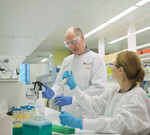
To model the disease, researchers reprogrammed skin cells from affected children into brain cells that mimic how the condition develops. These cells reproduced key features of the disease, including toxic build-up, inflammation and ongoing cell loss.
Using this platform, combined with advanced imaging and artificial intelligence, the researchers screened 63 existing medicines and identified nine that significantly improved cell function within two weeks. Several of the drugs reduced brain cell damage, while others restored critical signalling linked to learning and behaviour. The findings also suggest that combining treatments may produce stronger, longer-lasting effects.
Lead researcher Professor Cedric Bardy, who heads the Laboratory for Human Neurophysiology and Genetics at SAHMRI and is the founding director of Brain Organoid Therapeutics, said the approach could dramatically accelerate treatment discovery. Not only does it enable rapid testing, it also means any promising drugs can be moved into clinical trials sooner, since they are already approved for other conditions.
“Almost all childhood dementias have a clear genetic cause, and gene therapies will remain essential to cure the disease,” Bardy noted. “However, identifying therapeutics that can manage daily symptoms and slow irreversible brain damage in children until a cure is discovered is urgently needed.”
In another recent Nature Communications study, the researchers demonstrated that brain cells from children with Sanfilippo become abnormally excited during early brain development and get stuck in overdrive. The team has now used their new platform to identify a combination of repurposed drugs that can return brain cell activity to healthy levels.
“This is really important, because if translated clinically, it may help the children manage troubling symptoms such as hyperactivity, while also protecting them from irreversible neuronal loss,” Bardy said.
While further studies are needed, the findings are believed to mark an important step towards faster, more practical treatments for childhood dementia. The research also provides a powerful new platform for testing treatments for other brain disorders, including Alzheimer’s disease.
Cancer drug enters clinical trials based on a false mechanism
A cancer drug currently being tested in patients appears to have entered clinical trials based on...
Russia insists there is "no plague case" following lab worker death
Russian health authorities say there is no evidence that pneumonic plague played a part in the...
Scientists 'reprogram' tumour-supporting immune cells
The approach, by an Australian team, uses lipid nanoparticles to target a type of immune cell...