Scientists 'reprogram' tumour-supporting immune cells
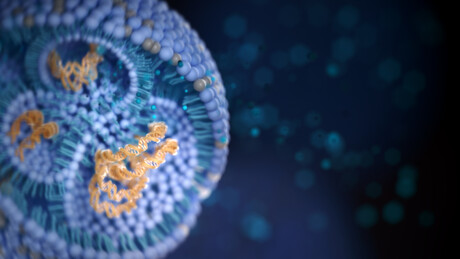
A team of Australian scientists spanning biomedical, engineering, immunology and oncology have developed tiny, targeted particles that could help the immune system fight cancer, which they say is achieved by reprogramming immune cells within the tumour environment.
To target a type of immune cell that can help tumours evade the body’s defences, the team adopted an approach that uses lipid nanoparticles, the same delivery technology used to deliver mRNA in COVID-19 vaccines.
In animal experiments, the nanoparticles were designed to find TAMs (tumour-associated macrophages) — large, white blood immune cells commonly found in tumours. Rather than attacking these cells, they were ‘reprogrammed’ to became less suppressive and help attract cancer-fighting T cells into the tumour.
“One of the biggest challenges in cancer immunotherapy is that the immune system may be capable of attacking a tumour, but the tumour environment can stop those immune cells from doing their job,” said lead researcher Professor Chunxia Zhao from Adelaide University’s School of Chemical Engineering.
“Our approach is designed to change that environment from within the tumour. By specifically targeting tumour-associated macrophages, we can deliver the treatment where it is needed and encourage the immune system’s cancer-fighting T cells to enter the tumour and become more active.”
Coated on the nanoparticles was an antibody that recognises a protein called TREM2 and which is highly expressed on the tumour-associated macrophages.
The particles delivered two key ingredients once inside the macrophages: an mRNA molecule carrying instructions to produce a chemical signal called CXCL9, and a compound called Resiquimod that helps switch the macrophages away from their immune-suppressing behaviour. Helping attract cancer-fighting CD8+ T cells into the tumour, CXCL9 acts like a chemical beacon.
Among the findings was that treatment, in mouse experiments, reduced the proportion of immune-suppressing macrophages by more than 60% and increased CXCL9 levels in tumours fourfold. Also observed by the researchers were greater numbers and activity of cancer-fighting T cells and a moderate reduction in tumour growth.
A study about the research was published open access in Science Advances and you can read it at doi.org/10.1126/sciadv.aed9568.
Overuse of inhalers can increase heart attack risk
Overuse of reliever inhalers is associated with higher risks of developing and dying from...
Unhealthy Western diet could accelerate cognitive decline
An unhealthy Western-style diet is associated with a faster cognitive decline in people with a...
Cancer drug enters clinical trials based on a false mechanism
A cancer drug currently being tested in patients appears to have entered clinical trials based on...