Heart implant brings hope to refractory angina patients
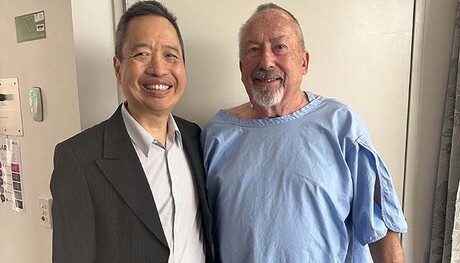
A team at Macquarie University Hospital has performed what they say is the first Australian procedure to implant a coronary sinus reducer (CSR) in the heart of a patient with severe angina for whom no other treatment options remained.
Angina — chest pain caused by reduced blood supply to the heart muscle — is one of the most common symptoms of coronary heart disease. For most people, a combination of medication and minimally invasive procedures such as angioplasty and placing stents in narrowed coronary arteries or coronary artery bypass surgery is able to restore blood flow to the heart and relieve symptoms.
However, a significant group of patients continue to experience disabling chest pain for which medications no longer provide relief (so-called ‘refractory angina’), despite having undergone all stent procedure options or bypass surgery. Many patients with refractory angina experience pain during even light physical activity, make frequent visits to emergency departments, and face ongoing anxiety, disruption and severely reduced quality of life.
“These patients can feel like their lives are ‘on hold’ — painful, unpredictable and very restricted with no viable treatments — so the CSR represents a potential new pathway to relief,” said interventional cardiologist Professor Martin Ng, who led the Macquarie team.
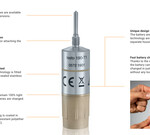
The Shockwave Reducer — manufactured by Shockwave Medical, a part of Johnson & Johnson MedTech — is a small, hourglass-shaped, stainless steel mesh device that is placed in the main vein collecting blood from the heart (the coronary sinus) via a catheter inserted in the groin or the neck. By narrowing and thus increasing the pressure in the coronary sinus vein, the CSR is understood to redistribute blood flow within the wall of the heart, improving oxygen supply in the parts of the heart muscle where it is needed most.
According to Ng, scientific evidence supporting use of the CSR has grown rapidly in recent years and the device has been tested in several high-quality randomised clinical studies. Key studies have shown that CSR significantly reduces the frequency and severity of angina, reduces hospital presentations for chest pain, enhances patients’ exercise capacity and improves quality-of-life scores. Importantly, implantation of the CSR device has been shown to be relatively safe, with a very low rate of complications in this high-risk group of patients.
“The procedure to implant the CSR is minimally invasive — it doesn’t require any open-heart surgery — and it usually takes less than half an hour, so most patients go home on the same day or the next day,” Ng said.
The patient treated by Ng’s team, 77-year-old Donald Stichter, has extensive coronary artery disease and had continued to suffer disabling chest pain and shortness of breath after exhausting all standard medical and surgical treatment options. According to Ng, the CSR represents a potential breakthrough treatment for patients like Mr Stichter who’ve been told nothing more can be done, offering a genuine opportunity for renewed mobility and quality of life.
Ng added that the CSR is backed by good clinical evidence, recognised in international guidelines, and increasingly used in major cardiac centres around the world. It is however not yet approved by the Therapeutic Goods Administration (TGA), so its current use in Australia is on a case-by-case compassionate basis.
“We look forward to being able to offer it to more Australian patients living with refractory angina,” Ng said.
Russia insists there is "no plague case" following lab worker death
Russian health authorities say there is no evidence that pneumonic plague played a part in the...
Scientists 'reprogram' tumour-supporting immune cells
The approach, by an Australian team, uses lipid nanoparticles to target a type of immune cell...
Existing medicines could help treat deadly childhood dementia
Australian researchers have identified several existing TGA‑approved medicines that could help...