Immune cells 'exhausted' by severe viral infection
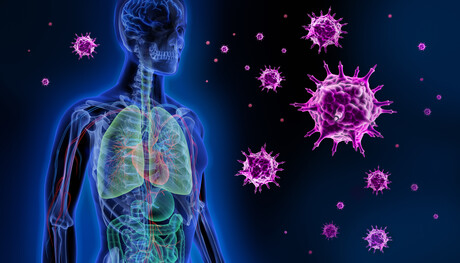
Melbourne researchers have identified mechanisms leading to the functional deterioration of the immune system in response to severe viral infections, such as HIV or COVID-19, with their results published in the journal Nature Immunology.
It is widely known that severe viral infections and cancer cause impairments to the immune system, including to T cells — a process called immune ‘exhaustion’. Overcoming immune exhaustion is a major goal for the development of new therapies for cancer or severe viral infections. Researchers from the Peter Doherty Institute of Infection and Immunity, led by Dr Daniel Utzschneider, Dr Sarah Gabriel and Professor Axel Kallies, are focused on the question of when and how T cells lose their function and become ‘exhausted’.
It was previously thought that during severe infections, T cells lost their function slowly and over long periods of time. However, the new research shows that T cells can be impaired within just a few days. It also identifies several new mediators of immune exhaustion that maybe targeted in new therapies.
“This is an exciting finding, particularly in the context of COVID-19 as one of the big questions is why some people get severely sick, while others experience mild disease,” Dr Utzschneider said.
“We looked at both mild and overwhelming lymphocytic choriomeningitis virus infections in mice, which serves as a model for severe viral infections in humans, early after onset of disease and identified striking differences at the molecular and functional level.”
Dr Gabriel explained, “In response to overwhelming infections that are difficult to eliminate and may become chronic, we were able to show that T cells down-regulate their function within days, while T cells responding to a weaker infection remained highly functional.”
T cells are at the heart of immunotherapy for cancer. Therefore, understanding how T cell function is impaired is central to improving these therapeutic approaches and applying them to other diseases, such as viral infections.
“These findings are extremely exciting,” Prof Kallies said. “Our data show that T cells could be manipulated during early stages of severe viral infection to improve their activity.”
Dr Utzschneider was recently awarded a National Health and Medical Research Council Investigator Grant to further his research into T cell exhaustion.
Please follow us and share on Twitter and Facebook. You can also subscribe for FREE to our weekly newsletters and bimonthly magazine.
Scientists 'reprogram' tumour-supporting immune cells
The approach, by an Australian team, uses lipid nanoparticles to target a type of immune cell...
Existing medicines could help treat deadly childhood dementia
Australian researchers have identified several existing TGA‑approved medicines that could help...
Statins reduce heart attack and stroke risk in older people
It has previously been unclear whether statins were effective in reducing heart attack and stroke...