Psivida to collaborate with US firm Cirrus
Tuesday, 06 September, 2005
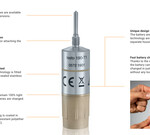
Perth nano-biotech company Psivida (ASX:PSD, NASDAQ:PSDV, Xetra:PSI) has contracted North Carolina-based R&D organisation Cirrus Pharmaceuticals to develop a number of specific drug candidates formulated in Psivida's modified silicon product BioSilicon.
The development contract has an initial extendable term of one year and aims to expand Psivida's BioSilicon product pipeline of reformulated drugs.
"We've got access to their dedicated team of scientists," said Psivida's investor relations manager, Brian Leedman.
The drugs being developed are those that lend themselves to delivery by the BioSilicon technology, such as those for treating dementia, said Leedman. "The opportunities are great in terms of reformulated drugs, particularly those that are off-patent."
Psivida will be able to claim patent protection to the extent that reformulations or new delivery demonstrate improved efficacy, safety and/or compliance when compared to the original product.
"When the actual potential new products are developed, the intellectual property will be 100 per cent owned by Psivida," said Leedman.
This new collaboration with Cirrus is not connected with Psivida's current negotiations to acquire a US-based drug delivery company, speculation about which recently prompted the company to suspend trading in its shares.
"We're expecting in the next few weeks that we'll have a formal acquisition agreement [with the US-based company], subject to shareholder approvals," said Leedman.
Psivida has also appointed Dr Paul Bulpitt, who was most recently employed at NuPharm Laboratories, as the company's pharmaceutical development manager. He will be located at Psivida's UK operations, PsiMedica.
Unhealthy Western diet could accelerate cognitive decline
An unhealthy Western-style diet is associated with a faster cognitive decline in people with a...
Cancer drug enters clinical trials based on a false mechanism
A cancer drug currently being tested in patients appears to have entered clinical trials based on...
Russia insists there is "no plague case" following lab worker death
Russian health authorities say there is no evidence that pneumonic plague played a part in the...