Giant squid found hidden in submarine canyons off Western Australia
Using eDNA, a team of Australian scientists have found hidden biodiversity off the WA coast, including the elusive Architeuthis dux and species possibly new to science.
On board the Schmidt Ocean Institute’s R/V Falkor, a Western Australian Museum-led expedition surveyed the deep Cape Range and Cloates submarine canyons, which are located around 1200 km north of Perth. Collecting more than 1000 samples from depths of up to 4510 m, the scientists — without needing to see or capture them — were able to document what species live in these deep habitats. This was achieved using environmental DNA (eDNA) — genetic material naturally shed by animals into seawater.
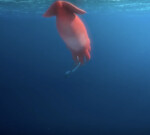
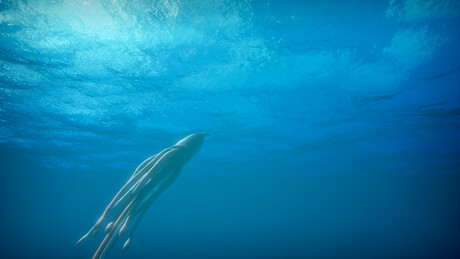
Traces of the Architeuthis dux, or giant squid, were among the most striking finds, detected across six separate samples in both the Cape Range and Cloates Canyons. Typically growing 10–13 metres (or longer than a school bus), giant squid have the biggest eyes in the animal kingdom — up to 30 cm in diameter, or the size of a large pizza — and can weigh 150–275 kg. Also found were deep‑diving whales such as the Kogia breviceps, or Pygmy sperm whale, and Ziphius cavirostris, or Cuvier’s beaked whale.
In all, 226 species across 11 major animal groups were detected, with rare deep‑sea fish, cnidarians, echinoderms, squid and marine mammals among them. Dozens of the species detected, the scientists said, had never previously been recorded in Western Australian waters, including the Somniosus sp. or sleeper shark, Typhlonus nasus or faceless cusk eel and the Rhadinesthes decimus or slender snaggletooth.
Conducting the research as part of her PhD studies at Curtin University and now at the Minderoo OceanOmics Centre at The University of Western Australia, Dr Georgia Nester was lead author of the study, published open access (doi.org/10.1002/edn3.70261) in Environmental DNA. “Finding evidence of a giant squid really captures people’s imagination, but it’s just one part of a much bigger picture,” Nester said.
“We found a large number of species that don’t neatly match anything currently recorded, which doesn’t automatically mean they’re new to science, but it strongly suggests there is a vast amount of deep‑sea biodiversity we’re only just beginning to uncover,” Nester added.
“This is the first record of a giant squid detected off Western Australia’s coast using eDNA protocols and the northernmost record of A. dux in the eastern Indian Ocean,” said WA Museum Head of Aquatic Zoology and Curator of Molluscs Dr Lisa Kirkendale, who also noted that there were only two other records of giant squid from Western Australia, without a sighting or a specimen for more than 25 years. “The WA Museum contributed expert identification of specimens from the expedition, supporting the development of a local curated genetic reference that strengthened the eDNA analyses.”
Water samples from the surface to more than 4 km deep were collected by Nester, who combined eDNA analysis with genetic reference sequences from physical specimens collected by the remotely operated vehicle SuBastian. Identified by taxonomists, to aid further taxonomic research, the physical specimens are now permanently housed in the WA Museum’s Collection and Research Facility.
“By combining eDNA with conventional deep‑sea survey techniques, we can build a far more complete picture of biodiversity, revealing species, ecosystems and ecological patterns that would otherwise remain hidden,” Nester said. “This kind of information is critical for marine park planning and management, because it gives us a much clearer picture of what species are present and how communities are structured across depth.”
On the potential of eDNA to transform how scientists explore and protect the deep ocean, senior author on the study Associate Professor Zoe Richards from Curtin’s School of Molecular and Life Sciences said: “Environmental DNA gives us a scalable, non‑invasive way to build baseline knowledge of what lives there, which is essential for informed management and conservation.”
DNA test finds genetic cause of inherited muscle disease
Standard diagnostic tests for inherited muscle disease look for one kind of DNA change at a time...
Could this human tissue biobank find the cause of a bowel cancer surge?
In a new Australian biobank, lab comparisons of tissue donated by cancer patients will explore...
Microscopic life is mining decades-old toxic waste
At abandoned Flinders Ranges mines, stable radioactive and toxic metals are being turned into...