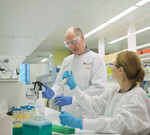
Prototype promises to build light analysis directly into imaging hardware
Cameras are highly effective at capturing images. However, extracting the kind of detail that can reveal differences in materials, surface conditions or environmental changes that appear identical to the human eye has, according to researchers at RMIT University, typically been handled by external laboratory equipment.
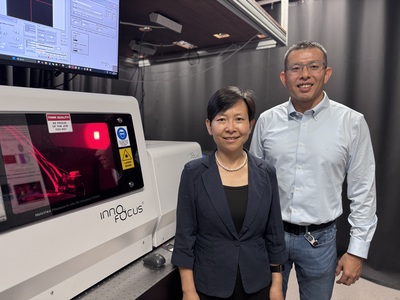
By bringing light analysis alongside imaging, a collaboration between RMIT researchers — led by Distinguished Professor Baohua Jia — and a team at Zhejiang University — led by Professor Jianrong Qiu — has brought together ultrafast laser fabrication and applied photonics to turn a new physical approach into a functioning prototype.
“This is not about adding more image processing after the fact,” said Jia from RMIT’s Centre for Atomaterials and Nanomanufacturing (CAN). “It introduces a new physical component that separates light at a very small scale, close to the sensor itself.”
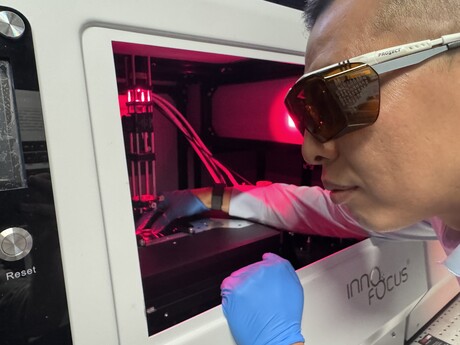
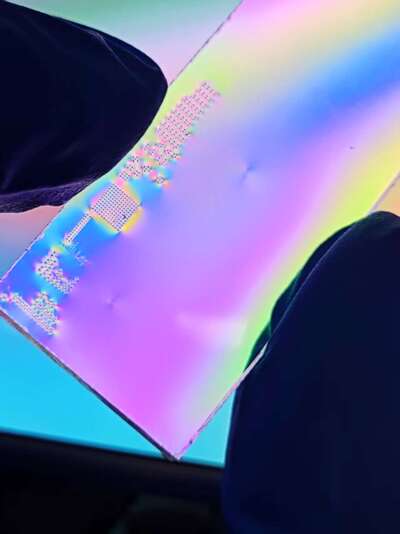
Ultrafast laser pulses were used by the researchers to create tiny spiral-shaped structures inside transparent materials and a specialised optical system to visualise them. These structures act like microscopic light sorters, breaking incoming light into distinct patterns that a sensor can read.
Without moving parts or additional equipment, the compact device works by analysing light on the spot. The researchers said the prototype overcomes several common limitations of existing microscale technologies, working across visible and near infrared light and being largely unaffected by viewing angle.
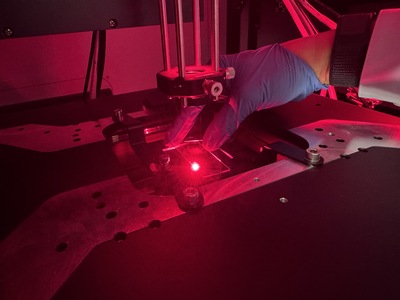
The team integrated the structure with a commercial image sensor to demonstrate the feasibility of the approach, showing that it could detect spectral information and support microscopic spectral imaging. “Demonstrating that a concept works at the chip level is a critical step,” co-author Dr Han Lin from RMIT said.
“It helps move the discussion from what is theoretically possible to what kinds of sensing systems could realistically be built in the future,” Qiu said. Bo Zhang from Zhejiang University said: “Next steps include scaling up fabrication, testing other materials and refining the software used to reconstruct light information.”
The study was published in Nature Electronics (doi.org/10.1038/s41928-026-01618-z).
Ultrasound improves protein recovery from cauliflower waste
Abundant but often discarded during processing, cauliflower leaves contain protein and dietary...
Can yawning advance the study of neurodegenerative diseases?
Australian neuroscientists using MRI scans to monitor flow of cerebrospinal fluid during yawning...
Could this optical centrifuge demystify exotic, frictionless superfluids?
A new optical centrifuge has enabled the first demonstration of controlled spinning inside a...