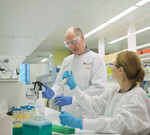
Ultrasound improves protein recovery from cauliflower waste
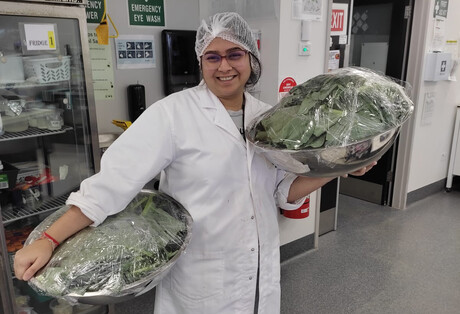
Abundant but often discarded during processing, cauliflower leaves contain protein and dietary fibre. Now, Australian scientists have explored reuse potential via ultrasound.
Cauliflower leaves from a commercial farm in western Melbourne were used to test different ways of processing the waste and to see how much protein scientists could recover. Using a high-power ultrasound, the early-stage research found that it increased dry matter yield and improved protein recovery from the leaves. It was also found that different processing settings changed the final concentrate’s particle size, colour, solubility and structure.


“Ultrasound uses high-frequency soundwaves to disrupt plant cell walls and help release protein from the leaves,” said lead researcher Professor Asgar Farahnaky from RMIT University’s School of Science. “There is growing interest in alternative protein sources, and using existing waste streams could be a practical way to meet that demand without requiring additional production.”

RMIT PhD candidate Kinjal Furia was study lead author, and said the research was about adding value to what was already in the system. “If we can use food waste streams more effectively, we can reduce environmental impacts while responding to growing interest in alternative protein sources,” Furia said.
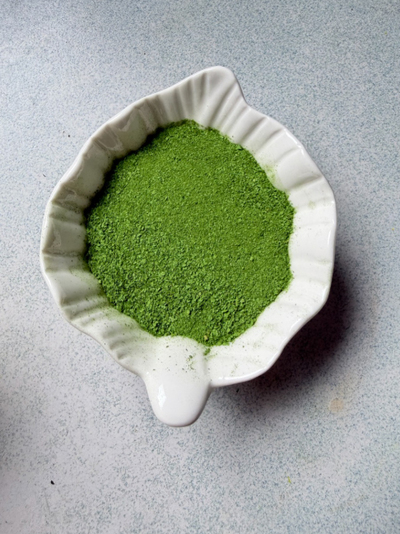
The process could help food manufacturers turn vegetable waste into protein ingredients, the researchers believe, reducing waste and adding value to existing crops. The study was published open access (doi.org/10.1007/s11947-026-04225-0) in Food and Bioprocess Technology. Further work is needed to test the process at pilot scale, assess energy efficiency and evaluate sensory acceptability in food products, the researchers said.
Prototype promises to build light analysis directly into imaging hardware
Thanks to a new chip, researchers believe they may be able to help cameras capture details that...
Can yawning advance the study of neurodegenerative diseases?
Australian neuroscientists using MRI scans to monitor flow of cerebrospinal fluid during yawning...
Could this optical centrifuge demystify exotic, frictionless superfluids?
A new optical centrifuge has enabled the first demonstration of controlled spinning inside a...