Bio-inspired robotic bird has stable flight in its sights
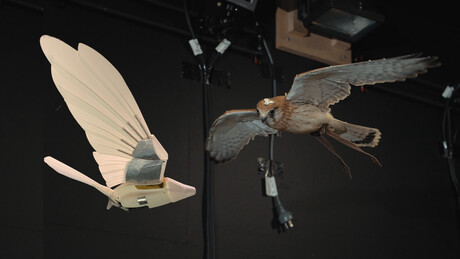
The nankeen kestrel is among the most stable fliers in the avian world. Using motion capture technology, researchers have created a robotic replica.
Tracking the movements of kestrels in gusty and turbulent conditions of RMIT University’s Industrial Wind Tunnel facility, researchers took their investigations further than studying movements to create a robotic replica capable of imitating the movements most crucial to kestrels’ remarkably stable flight — all part of understanding how subtle wing and body adjustments contribute to kestrels’ stability and exceptional hovering capabilities.
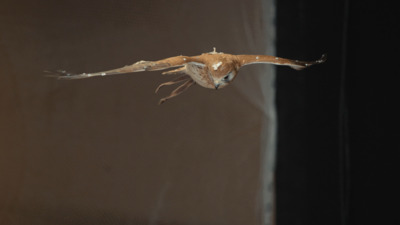
“Birds don’t rely on a single response to wind gusts,” said Matt Penn, an RMIT researcher who led part of the research. “They constantly adjust their wings and tails to stay balanced, while the natural flexibility of their feathers and joints helps absorb sudden changes in airflow. They can also sense disruptions very quickly, which allows them to respond almost instantly and maintain control.”
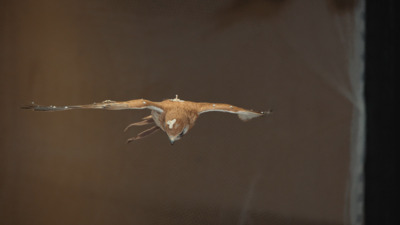
Understanding how birds naturally cope with rough air could, the researchers said, help engineers design small unmanned aerial vehicles (sUAVs) that are safer, more efficient and fly more smoothly — important given that atmospheric turbulence is expected to worsen due to climate change. Commonly used for applications including search and rescue, agricultural monitoring, aerial photography and package delivery, sUAVs are often grounded in turbulent conditions.
Published across two papers in the Journal of the Royal Society Interface, the project is part of a multi-year collaboration between RMIT and the University of Bristol. “By creating a robot replica, we were able to measure how specific movements were contributing to steadiness in flight,” said Dr Mario Martinez Groves-Raines, who completed the research during his studies at RMIT and the University of Bristol, and is now at the Royal Veterinary College in London.
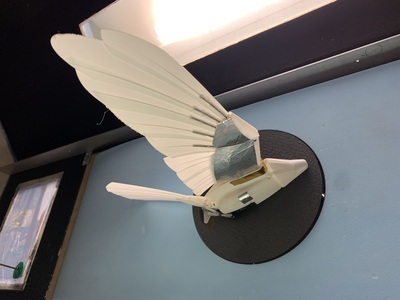
“We uncovered several unique techniques behind the kestrel’s impressive stability. Many of these techniques have the potential to improve manoeuvrability of small aircraft, which encounter similar challenges to kestrels,” Groves-Raines said.
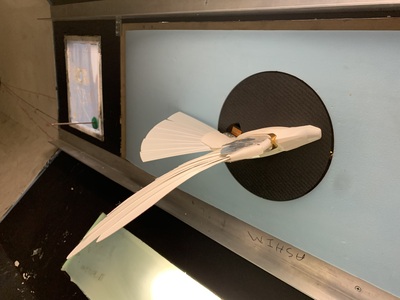
While sUAVs already use a range of mitigation techniques similar to those seen in birds, due to complexity and efficiency trade-offs, the researchers said that few have been implemented effectively in operational aircraft. Initially focused on smaller aerial vehicles, the researchers hope to simplify the collected data for adaption in larger-scale aircraft.
Both papers were published open access this year and you can read them at doi.org/10.1098/rsif.2025.0978 and doi.org/10.1098/rsif.2025.0930.
Could this 'nanobone' material allow children to regrow bone?
Australian scientists believe they have found an alternative to invasive bone graft procedures in...
The last mile of life sciences innovation
How do we translate technological possibility into meaningful real-world impact?
Machine learning uncovers patterns in DNA methylation
A new machine-learning method identifies differentially methylated DNA regions without sample...