Protecting particles that carry mRNA in dry vaccine patches
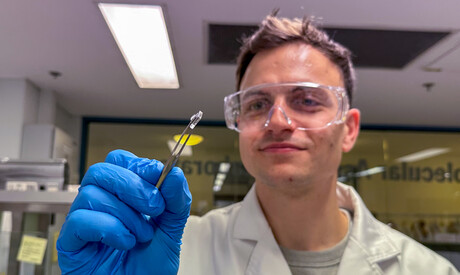
Combining expertise from RMIT University, MIT and Harvard Medical School, scientists set out to provide practical guidance for future mRNA dry vaccine patch design.
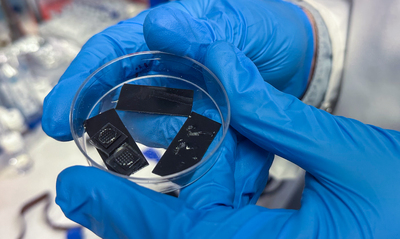
As an alternative to traditional injections, microneedle patches use hundreds of tiny tips to deliver vaccine into the skin. Now, drawing on RMIT University’s materials characterisation expertise, Massachusetts Institute of Technology’s work in microneedle and mRNA delivery technologies, and Harvard Medical School expertise in virology and immunology, a study published in Advanced Functional Materials examines what happens to the fragile particles used to carry mRNA when they are dried into the dissolvable material used in microneedle patches.
Building on earlier research — led by MIT — that showed the patches could be printed and stored at room temperature using a model mRNA system, this study explained why some dry patch formulations perform better than others. With 14.3 million children globally receiving no vaccines at all in 2024, according to the World Health Organization and UNICEF, reducing the need for cold-chain logistics could help remove one barrier to vaccine delivery, the researchers said — particularly in lower-resource settings.
“Many mRNA vaccines need to be stored at very low temperatures, adding cost and complexity to transport and delivery,” lead author Dr Brendan Dyett from RMIT said. “Our study helps explain how the particles that carry mRNA respond to drying and rehydration, which is an important step towards designing future vaccine patches that are more stable and practical to distribute.”
Studying particles that carry mRNA before drying, during drying and after rehydration, the team used advanced imaging and X-ray techniques, which allowed them to see how the particles changed through the process and to determine which formulation conditions best preserved their structure and biological activity. Both the amount of polymer used in the patch material and the design of the nanoparticles was found to influence how well the particles survived drying and re-dissolving; providing, the researchers said, practical guidance for future dry mRNA vaccines and therapies.
“This research is helping build the foundation for microneedle patches that could make advanced vaccines and therapies simpler to use and easier to access,” lead researcher RMIT Distinguished Professor Calum Drummond AO said. “The long-term goal is to support technologies that are not only effective, but practical for the places and communities that need them most.”

Further optimising the nanoparticle and patch formulations, testing how the design translates to immune responses and exploring whether similar approaches could be applied to other mRNA medicines have been described as the next steps for the research.
The study was published open access and you can read it at doi.org/10.1002/adfm.75716.
Air pollutant exposure linked to glaucoma, cataracts and suicide
People who are exposed to high levels of air pollution are more likely to develop glaucoma and...
Could this 'nanobone' material allow children to regrow bone?
Australian scientists believe they have found an alternative to invasive bone graft procedures in...
The last mile of life sciences innovation
How do we translate technological possibility into meaningful real-world impact?