Bioniche expands reach for cow fertility product
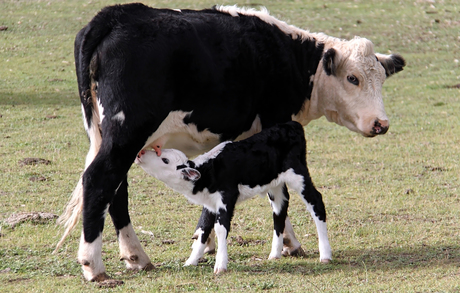
Bioniche (ASX:BNC) has secured regulatory approval in seven European countries for Folltropin, its superovulation stimulating hormone for cattle.
Regulatory bodies in Austria, Czech Republic, Denmark, Finland, France, Germany and Poland have agreed to register the product.
Of these, Austria, Denmark, France and Germany have all granted formal marketing approval. Bioniche said it expects the remaining approvals to follow within the next few weeks.
The company aims to launch the product in the markets within 90 days of receiving the respective final approvals.
“The market authorisation for seven new European markets for Folltropin is an important milestone for our animal health business,” said Bioniche president for Animal Health Andrew Grant. “These additional markets represent approximately C$1 million ($1.05 million) in new sales revenue potential in the first year following launch [alone].”
Folltropin has previously been sold in the UK, Italy, Spain, the Netherlands and Ireland - as well as Australia, New Zealand, all of North America, Korea, China, South Africa and some Latin American markets.
Folltropin is a follicle stimulating hormone (FSH) product designed for reproductively mature cattle. Bioniche has been working on developing a synthetic FSH product that would cut down the risk of contamination posed by products that use animal materials.
In May, the company started the search for a buyer for its animal health business. A sale would leave the company with its food safety and human health operations, including phase III bladder cancer treatment Urocidin.
Bioniche signed a debt refinancing, funding and licensing deal with Canada’s Paladin Labs earlier this month. The deal will give Paladin the exclusive rights to market and distribute Urocidin in Canada, South Africa and Mexico.
Bioniche shares were trading unchanged at $0.30 as of around 1 pm on Tuesday.
Could this 'nanobone' material allow children to regrow bone?
Australian scientists believe they have found an alternative to invasive bone graft procedures in...
The last mile of life sciences innovation
How do we translate technological possibility into meaningful real-world impact?
Machine learning uncovers patterns in DNA methylation
A new machine-learning method identifies differentially methylated DNA regions without sample...