Why are aging immune cells less effective?

A new study led by the Monash Biomedicine Discovery Institute has uncovered a genetic blueprint of immune aging, shedding light on why our bodies are less able to fight cancer and infections as we grow older.
Published in the journal Science Immunology, the preclinical study identified genetic changes that cause aging immune cells to become less effective, helping to explain why older people are more susceptible to cancer and experience more frequent and severe infections.
According to first author Dr Daniel Thiele, aging is the biggest risk factor for cancer overall. This is because our immune system is constantly surveying our bodies for potentially cancerous cells and eliminating them — but this natural defence system becomes less effective as we age, making us more vulnerable to cancer and infections and reducing our ability to respond to vaccines.
“This study provides a blueprint of immune aging, from which we can now identify potential targets to reverse aspects of that decline,” Thiele said.
The researchers focused on CD8+ T cells, a type of immune cell that identifies and destroys infected and cancerous cells. Using preclinical mouse models, the researchers identified three distinct ways aging disrupts the genetic instructions that control how immune cells function, affecting their ability to adapt to new threats, regulate immune responses and remain healthy.
They also discovered a previously unidentified group of aging immune cells that not only lose their ability to protect the body against disease, but also actively suppress the responses of other immune cells.
“Even within the same aging individual, we found that immune cells can age in remarkably different ways,” Thiele said.
“Some cells lose their ability to protect us against disease, while others begin to interfere with the body’s own immune defences.
“By understanding what goes wrong within these cells, we can begin to identify more targeted ways to restore immune function as we age.”
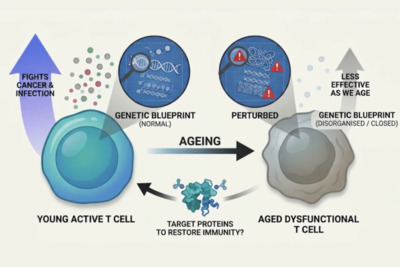
The research has already laid the foundation for a separate discovery by the Monash team, which recently identified an immune cell-derived protein, known as granzyme K, as a driver of age-related organ damage in mice.
The research could pave the way for new therapies that help people maintain stronger, healthier immune systems for longer, with senior researcher Professor Nicole La Gruta saying it could have implications for how we approach aging more broadly.
“By understanding what drives aging within our immune cells, we may ultimately be able to target not only immune aging, but aging throughout the body,” La Gruta said.
Hospital sewage promotes antibiotic-resistant bacteria
Antibiotics excreted by patients promote antibiotic-resistant bacteria in hospital sewers,...
'Mini brains' mimic MS myelin damage
The MS organoids give researchers a highly detailed cellular view of myelin destruction...
Fast-aging placentas may contribute to pre-eclampsia
Placentas affected by pre-eclampsia show several signs of accelerated aging, including increased...