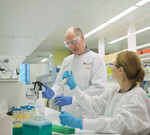
Axima@Saramis microbial identification system

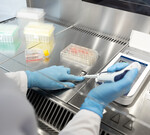
The Axima@Saramis microbial identification system can be used in analytical and diagnostic laboratories to quickly and reliably identify microorganisms that can cause disease and damage. Cultured microorganisms can be directly applied to the MALDI sample target and introduced to an Axima series MALDI-TOF mass spectrometer.
The system can identify 380 clinical samples within 5 h in the high-throughput mode, less than 1 min per sample. The results appear in a spreadsheet format, exportable to common data processing software.
Gram-positive and gram-negative bacteria, yeast, fungi and spores are identified based on their characteristic MALDI-TOF MS fingerprints with up to 98% recovery rate down to sub-species level.
No pre-selection of analytical methods is required so hands-on time is reduced.
The system is suitable for a wide range of applications in a number of industries, including diagnostics, pharmaceuticals, healthcare and food. These include: diagnosis of human and veterinarian infectious pathogens; in the drug discovery process it recognises new isolates generated by microorganisms and classifies the unknown into a taxonomic tree; identification and classification of strains based on phenotype characteristics in culture collections; recognition of upcoming toxic microorganisms at an early stage in food and beverage manufacturing processes.
Designed for medium to high-throughput identification, the system can be easily integrated into automated laboratory environments and any LIMS. It is available for research use only.
Phone: 02 9684 4200
Mercodia Insulin MBeads Assay
The assay is designed to offer high accuracy by specifically measuring human insulin while...
Waters BD FACSDiscover A7 Cell Analyzer
The BD FACSDiscover A7 Cell Analyzer combines high spectral resolution and sensitivity with...
Lumiprobe CytoTracer fluorescent cell dyes
The dyes rapidly penetrate cells, form intracellular membrane-impermeable products, and deliver...
Learn More
I am interested in Axima@Saramis microbial identification system.
Complete the form and a supplier representative will be in touch.