Research aims to reduce side effects of cancer treatment
23 March, 2012The painful side effects of cancer treatment, including nausea and hair loss, could be a thing of the past, thanks to groundbreaking chemical research being conducted at the University of Canterbury.
Australian Synchrotron discovers how plasminogen is activated in the body
09 March, 2012Researchers at Monash University have used X-ray beams created by the Australian Synchrotron (AS) to discover how enzymes work to dissolve blood clots and clean up damaged tissue in the body - a finding that could ultimately lead to a reduction in the number of heart disease-related deaths occurring each year as a result of blood clots.
International consortium delivers data on cell changes during disease development
02 March, 2012An international consortium comprising around 100 scientists and mathematicians, including Australian researchers, has for the first time pooled shared knowledge and data to deliver a holistic understanding of the biological changes in a cell. The findings of the Bacillus Systems Biology (BaSysBio) project, published in leading journal Science, will ultimately lead to the development of new drugs to protect people against antibiotic-resistant infections, including golden staph.
Vitamin C may enhance radiation therapy for aggressive brain tumours
22 February, 2012Recent research by the University of Otago, Wellington, has shown that giving brain cancer cells high dose vitamin C makes them much more susceptible to radiation therapy.
New findings in drug-induced receptor activity using the Roche xCELLigence system
17 February, 2012A research team, led by Dr Michel Bouvier at the Institute for Research in Immunology and Cancer (IRIC) of the University of Montreal in Quebec, has used the Roche xCELLigence SP Instrument to measure changes in cell response following ligand.
Production method could fill major need for new sources of MSCs
15 February, 2012Stem cell scientists from the University of Queensland Centre for Clinical Research (UQCCR) have discovered a method for producing mesenchymal stem/stromal cells (MSCs) from human iPSCs that substantially improves on current methods and speeds up conversion time.
Drug link may help fight cancer
15 February, 2012Australian scientists say they have made a genetic breakthrough which could help in the fight against cancer. The Melbourne-based team says it has pinpointed a link between non-steroidal anti-inflammatory drugs (NSAIDs), such as aspirin, and the ability of tumours to spread in the body.
Lessening the impact of cancer-causing hormones
10 February, 2012Increasing the production of proteins that help rid the body of toxins may play a crucial role in the fight against breast and prostate cancer, researchers from Flinders University believe.
Lizards incubated at higher temperatures have enhanced learning performance
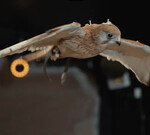
08 February, 2012A hotter home appears to produce babies with better cognitive abilities - but before you turn up the heater, the research was conducted on the Australian lizard Bassiana duperreyi by researchers from the University of Sydney.
Biosceptre develops targeted antibodies for cancer treatment
01 February, 2012 by Lauren DavisBiosceptre has announced that it is about to clinically trial the use of targeted antibodies as a method to treat cancer. At a Sydney conference held on 24 January, it was revealed that the company has identified a receptor found only in cancer cells.
Star Wars-inspired bacterium provides glimpse into the evolution of life
08 December, 2011A bacterium whose name was inspired by the Star Wars films has provided new clues into the evolution of our own cells and how they came to possess the vital energy-producing units, mitochondria.
Acquired traits can be inherited via small RNAs
08 December, 2011Columbia University Medical Center (CUMC) researchers have found the first direct evidence that an acquired trait can be inherited without any DNA involvement. The findings suggest that Lamarck, whose theory of evolution was eclipsed by Darwin’s, may not have been entirely wrong.
Australia signs up to newly formed SKA organisation
25 November, 2011Australia and New Zealand’s bid to host the square kilometre array (SKA) radio telescope took a step forward with the formation of the SKA Organisation.
Optimal algorithm for determining focus error
27 October, 2011Researchers have discovered how to extract and use information in an individual image to determine how far objects are from the focus distance.
Evidence for first production of oxygen on Earth
21 October, 2011A new study is believed to have resolved a major debate about when oxygen began to be produced on Earth and how long it took before oxygen levels were enough to support the growth of life.