Urine chemistry analyser
07 April, 2009 | Siemens Ltd
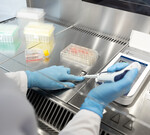
The Siemens Healthcare Diagnostics Clinitek Advantus Urine chemistry analyser enables automated reading of Siemens’ Multistix family of urinalysis testing strips in medium to high throughput settings.
Standardised epigenetic kits
07 April, 2009 | QIAGEN Pty Ltd
Qiagen has launched five additions to its EpiTect product line to help address the growing demand for standardised products for complete workflows in epigenetics.
Multi-vendor hardware control
07 April, 2009 | Shimadzu Scientific Instruments (Oceania) Pty Ltd
Control of Shimadzu’s Prominence series high-performance liquid chromatograph (HPLC) by Waters Empower/Empower 2 chromatography data system is now available through a collaboration between Waters and Shimadzu utilising the Open Interface Portal for multi-vendor hardware control. Shimadzu Prominence now seamlessly operates within the Empower software environment.
Wash stations for xMAP assays
07 April, 2009 | Bio-Rad Laboratories Pty Ltd
Bio-Rad Laboratories has released two Bio-Plex Pro Wash Stations for washing bead-based assays. The Bio-Plex Pro Wash station is used exclusively for magnetic beads. The Bio-Plex Pro II Wash Station automates magnetic and vacuum wash steps for researchers who use a combination of magnetic and polystyrene assays.
Microscope cameras
07 April, 2009 | Scientific Instrument & Optical Sales
Tucsen C mount microscope cameras are available in a range of resolutions including 1.3, 3, 5 and 8 megapixels. The colour CMOS cameras feature a USB 2.0 interface and are compatible with Windows XP and Vista. Manual image analysis as well as twain drivers are included in the software package.
SDMS
07 April, 2009 | Waters Australia Pty Ltd
Waters has released the NuGenesis scientific data management system (SDMS) for the Business and Enterprise editions of the Microsoft Windows Vista operating system platform (32 bit, Service Pack 1). Waters NuGenesis SDMS 7.1 Service Release 3 (SR3) also supports Microsoft Office 2007 with SP1 and includes updates for SDMS Vision Publisher that allow it to be validated on Vista and Office 2007.
Vibrio identification
07 April, 2009 | Dutec Diagnostics Pty Ltd
V. parahaemolyticus, V. vulnificus and V. cholerae genic bacteria, which can cause serious seafood poisoning. For the detection of those bacteria, conventional methods (TCBS) are long, require a heavy workload and are not very sensitive.
Clements benchtop centrifuge
07 April, 2009 | Medical Australia
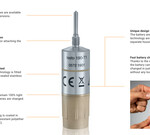
The Clements Orbital 360 Benchtop Centrifuge (CEN 91700) features a maintenance free, brushless DC motor, capable of a maximum speed of 5,000 rpm (4,100 g).
Gel documentation systems
07 April, 2009 | FB Australia
The FUSION FX7 is the latest addition to the range of gel documentation systems from Vilber Lourmat, France.
Xeno-free culture substrate
07 April, 2009 | Life Technologies
Cellstart is a fully defined, completely animal-origin-free substrate for the attachment and expansion of embryonic, mesenchymal and neural stem cells.
Cancer biomarkers evaluation
07 April, 2009 | Bio-Rad Laboratories Pty Ltd
Bio-Rad Laboratories has released a technical note (tech note 5654A) describing the study of an evaluation of cancer biomarkers. In the study, Bio-Rad researchers evaluated the Bio-Plex suspension array system’s ability to detect the levels of nine biomarkers, which were selected for their potential clinical relevance to cancer development. The nine biomarkers: angiopoietin-2 (Ang-2), VEGF, PDGF-BB, leptin, PECAM-1, IL-8, follistatin, HGF and G-CSF were collected in sera from four different types of cancer patients.
MALDI mass spectrometer
07 April, 2009 | Shimadzu Scientific Instruments (Oceania) Pty Ltd
Shimadzu Scientific Instruments has updated its line of Axima MALDI TOF mass spectrometers with three systems to meet the needs of researchers with varying applications and budgets.
PCR plates
07 April, 2009 | Eppendorf South Pacific Pty Ltd
The twin.tec real-time PCR plates offer all the features of regular twin.tec plates with the addition of white wells for real-time PCR.
Gel scalpels
07 April, 2009 | Lomb Scientific (Aust) Pty Ltd
Excise target bands without scratching the screen of UV transilluminators with the DNase and Rnase-free gel scalpels.
CGH microarray software
07 April, 2009 | Agilent Technologies Australia Pty Ltd
Agilent DNA Analytics 4.0 software can be used for visually exploring, detecting and analysing patterns in microarray data. New in this release are: the ability to analyse more than 100 samples per experiment, a free genomic browser and copy number variation (CNV) analysis capability. These features join existing chromatin immunoprecipitation-on-chip (ChIP-on-chip), array-based comparative genomic hybridisation (aCGH), and gene expression analytics capabilities.